Quick Answer
Key Takeaways
- Leadership excellence depends on capability, not position — promotion changes responsibility, but it does not automatically build leadership skill.
- Leadership Performance Intelligence™ treats leadership as an interconnected system, not a set of isolated competencies.
- Organisations that strengthen leadership foundations before pursuing strategy see more sustainable, consistent results.
- The Burn Bright Foundations Leadership Framework™ rests on five foundations: personal, ethical, professional, learning, and sustainability.
- Wellbeing is not separate from performance — Leadership Sustainability™ treats it as a performance strategy.
Foundations Leadership: Why Strong Leadership Begins Before Strategy
Executive Summary
Many organisations attempt to solve leadership problems by investing in strategy, technology or structural change before strengthening the quality of leadership itself. This often produces temporary improvements while leaving the underlying capability unchanged.
Burn Bright Advisory proposes a different approach through Leadership Performance Intelligence™. Rather than viewing leadership as a collection of isolated competencies, Leadership Performance Intelligence™ recognises leadership as an integrated system built upon strong foundations, including professional judgement, ethical decision making, reflective practice, emotional intelligence, adaptability, sustainable workload management, and continuous knowledge development.
Without these foundations, sophisticated leadership programmes frequently fail because leaders lack the internal capability to apply them consistently. This article introduces the concept of Foundations Leadership and explains why organisations seeking long-term excellence should begin with leadership capability before leadership strategy.
Introduction
Leadership development has become one of the largest organisational investments across business, healthcare, education and public service. Billions are spent every year on leadership programmes, executive coaching, competency frameworks and organisational transformation initiatives.
Yet many organisations continue to experience leadership burnout, declining engagement, ethical failures, inconsistent decision making, poor succession planning, and change fatigue.
The obvious question is why.
The answer may be simpler than many leadership models suggest. Many organisations attempt to build the upper floors of leadership before constructing solid foundations.
Leadership cannot outperform the quality of the leader.
Processes cannot compensate for poor judgement.
Technology cannot replace ethical thinking.
Strategy cannot overcome weak leadership capability.
Before organisations improve leadership systems, they must first strengthen the people responsible for leading them. This is the central principle behind Leadership Performance Intelligence™.
Leadership Is More Than Position
Leadership has traditionally been described through authority, responsibility and organisational hierarchy. While these remain important, they are insufficient for today’s complexity.
Modern leadership requires leaders who can simultaneously think strategically, regulate emotions, navigate uncertainty, manage competing priorities, maintain ethical standards, build psychological safety, sustain personal wellbeing, and continually learn.
These capabilities do not emerge automatically through promotion. Nor do they appear because someone possesses technical expertise.
Excellent clinicians do not automatically become excellent healthcare leaders.
Outstanding teachers do not automatically become exceptional school principals.
Successful engineers do not automatically become influential executives.
Foundations Leadership recognises that sustainable leadership begins long before formal leadership positions.
Leadership Performance Intelligence™: A Different Perspective
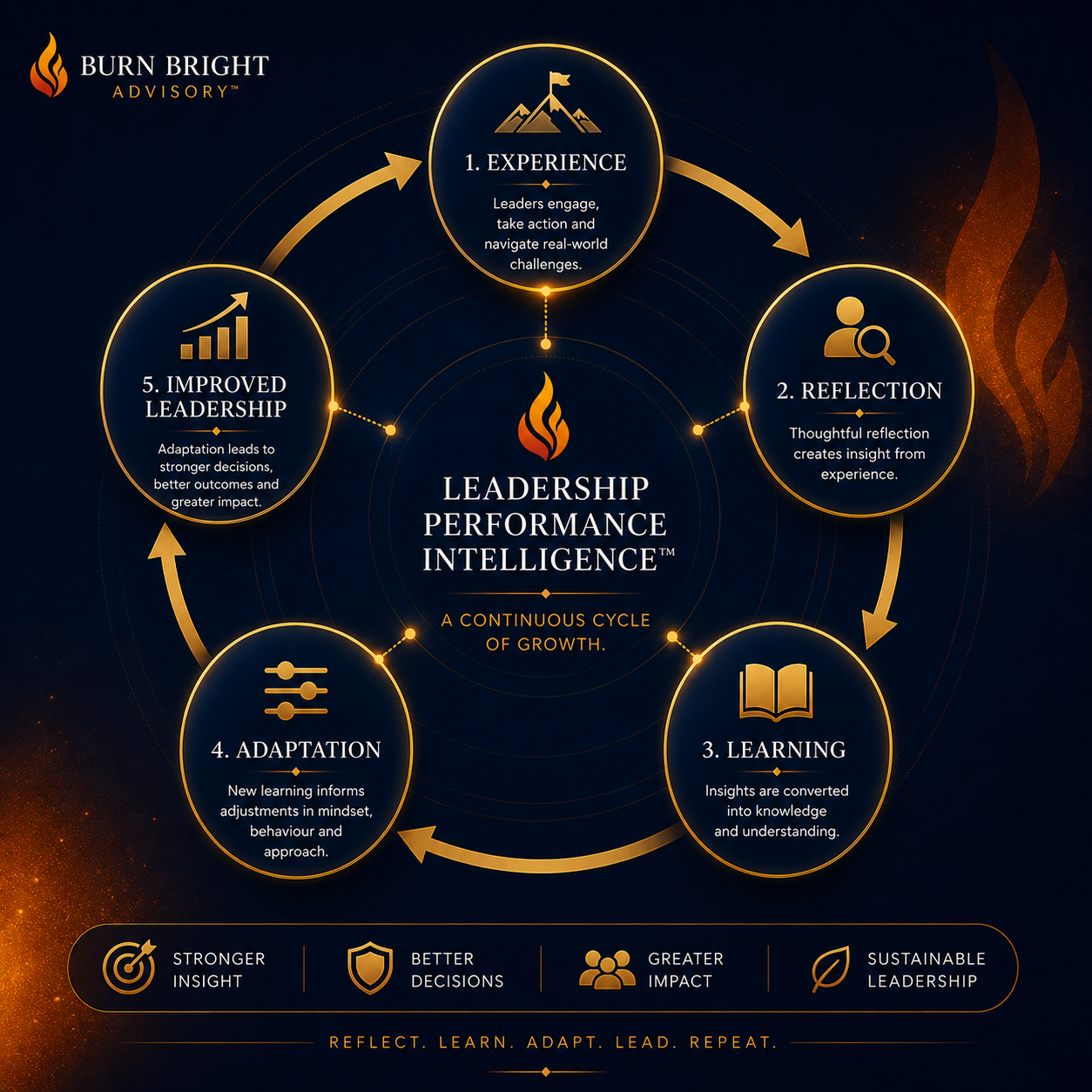
Burn Bright Advisory introduces Leadership Performance Intelligence™ as a comprehensive framework for understanding how effective leadership develops over time. Rather than viewing leadership through isolated competencies, Leadership Performance Intelligence™ considers leadership as an interconnected system of capabilities.
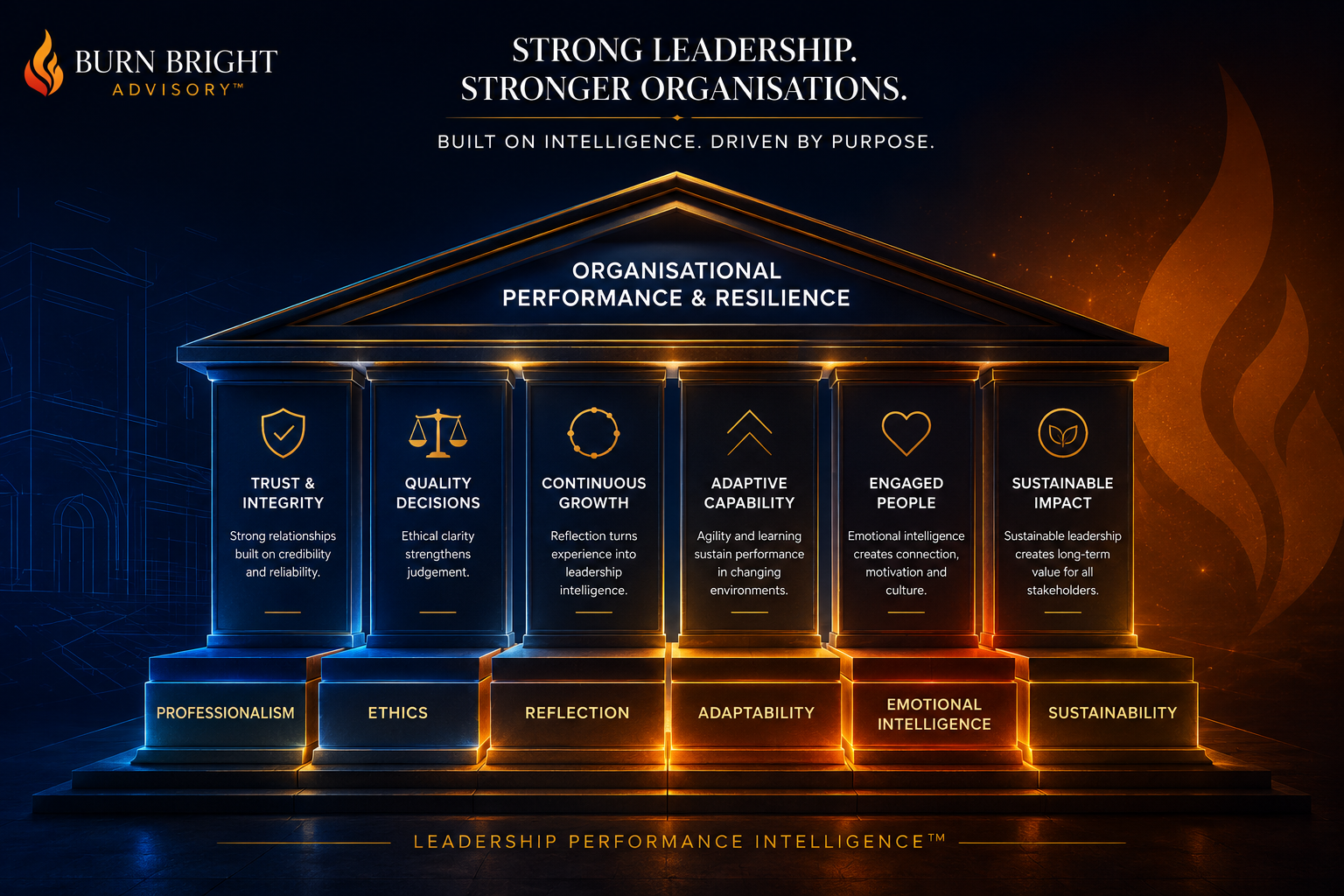
The framework recognises that high-performing leaders consistently integrate multiple forms of intelligence into everyday practice. Together these create the foundations that support every leadership decision:
Compass The Nine Leadership Intelligences
- Professionalism Intelligence™ — maintaining professional standards and credibility
- Ethics Intelligence™ — making principled decisions under pressure
- Constructivism Intelligence™ — creating environments where learning continuously develops
- Adaptability Intelligence™ — responding effectively to uncertainty
- Visionary Leadership Intelligence™ — connecting long-term purpose with everyday action
- Reflective Practice Intelligence™ — learning through continual evaluation
- Knowledge Development Intelligence™ — building organisational capability through evidence and learning
- Emotional Intelligence™ — understanding emotions, relationships and influence
- Leadership Sustainability™ — maintaining performance without burnout
Why Foundations Matter
Every profession recognises the importance of foundations. Architects begin with structural engineering. Pilots master safety before advanced manoeuvres. Doctors learn anatomy before surgery.
Leadership should be no different.
Without strong foundations, organisations experience predictable problems.
Decision Quality Declines
Leaders overwhelmed by competing priorities often rely upon habit instead of reflection. Quick decisions gradually replace thoughtful judgement. Over time, organisations begin solving symptoms instead of underlying causes.
Ethical Standards Drift
Ethical failures rarely begin with major misconduct. They usually begin with small compromises — unchecked workload, poor governance, weak accountability, and pressure to deliver short-term outcomes. Strong leadership foundations create consistent ethical reasoning even under significant pressure.
Adaptability Weakens
Rapid organisational change requires leaders who can learn continuously. Rigid thinking creates resistance. Reflective leaders remain curious. Curiosity creates adaptability. Adaptability sustains organisational performance.
Leadership Becomes Unsustainable
Many leaders mistakenly believe effectiveness requires constant availability. This belief contributes directly to exhaustion. Leadership Sustainability™ challenges this assumption — sustainable leaders preserve their capability so they can continue leading effectively over many years rather than burning brightly for only a short period.
The Leadership Foundation Pyramid
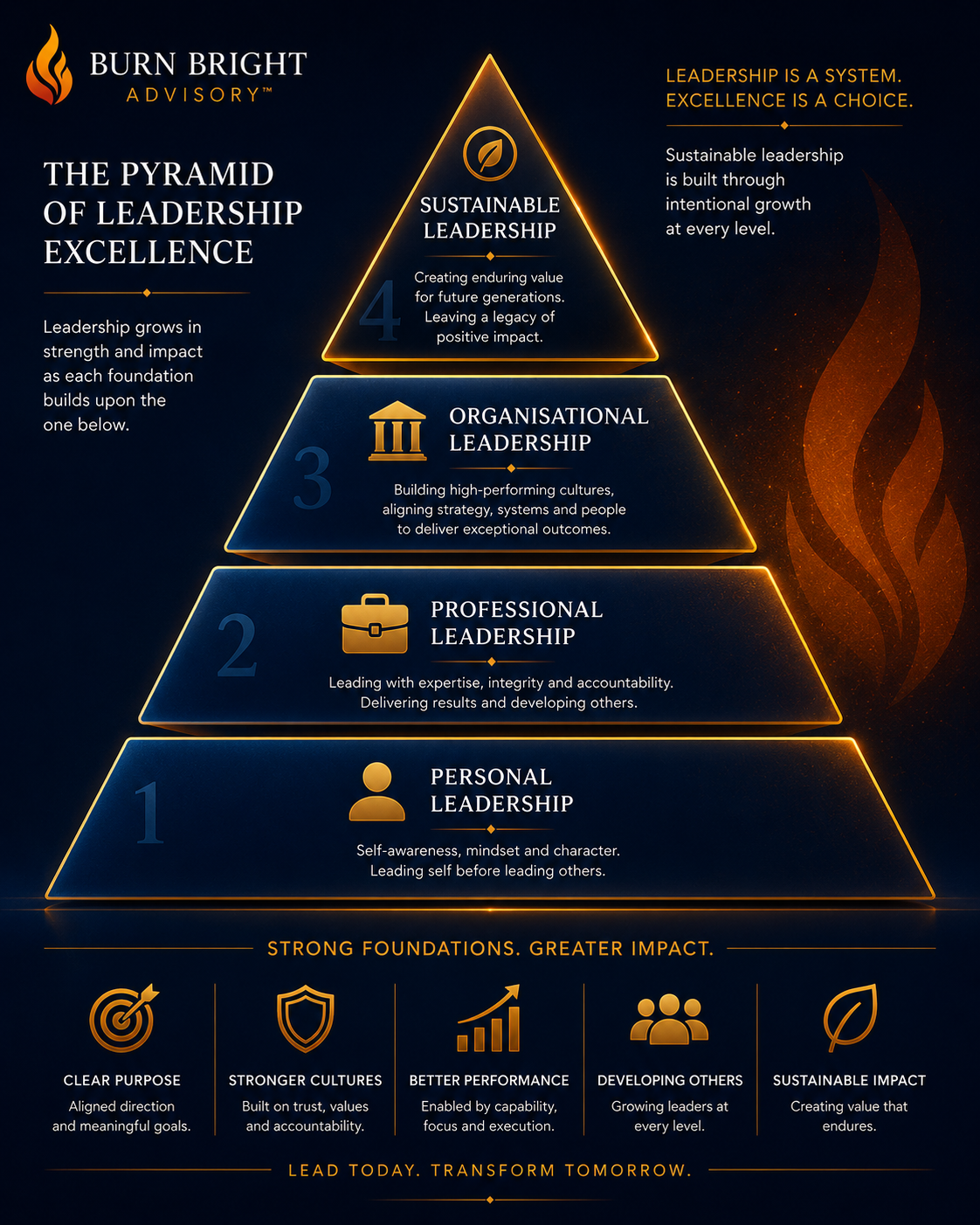
Burn Bright Advisory conceptualises leadership development as a progressive pyramid.
Level 1
Personal Leadership
Leaders first develop themselves. This includes self-awareness, emotional regulation, reflective practice, resilience, and ethical judgement.
Without personal leadership, organisational leadership remains unstable.
Level 2
Professional Leadership
Leaders begin influencing others through credibility, professionalism, communication, trust, and accountability.
Relationships become the primary mechanism of influence.
Level 3
Organisational Leadership
Leadership expands beyond individuals. Focus shifts toward culture, systems, governance, strategy, and performance improvement.
Decisions increasingly affect entire organisations.
Level 4
Sustainable Leadership
The highest level integrates every previous capability. Sustainable leaders balance organisational performance, employee wellbeing, continuous improvement, ethical governance, and future leadership capability.
These leaders understand that leadership is measured not simply by today’s results but by tomorrow’s organisational capacity.
Leadership Foundations Across Different Sectors
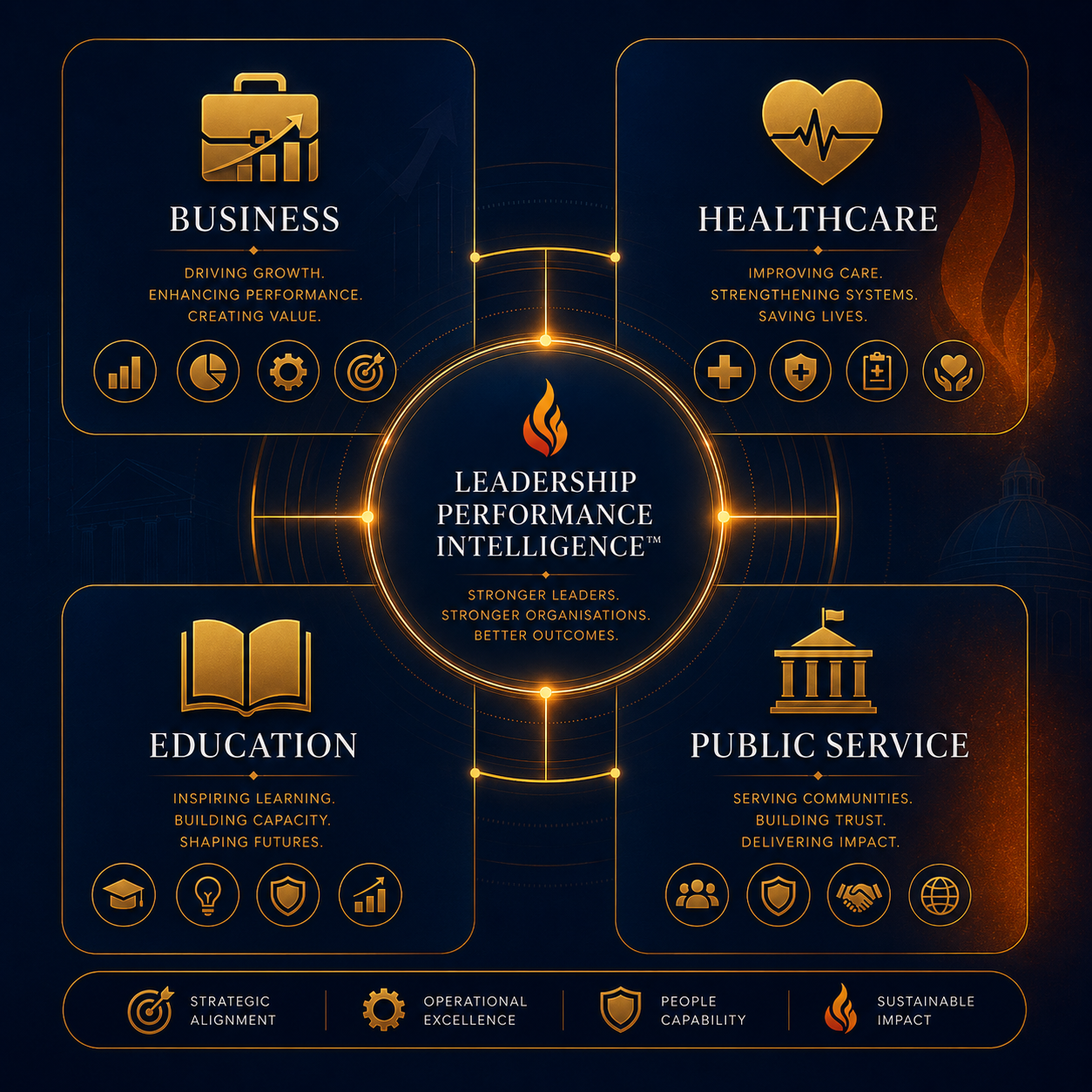
Although leadership principles remain universal, their application differs across sectors.
Business
Business leaders balance innovation, profitability and organisational growth. Strong foundations improve strategic decision making, customer trust, employee engagement, and organisational agility. Companies with capable leaders adapt more effectively to disruption because decision quality remains consistent during uncertainty.
Education
School leaders shape learning cultures. Strong foundations support teacher development, student outcomes, safeguarding, and community confidence. Reflective educational leadership builds sustainable improvement rather than temporary inspection success.
Healthcare
Healthcare leadership directly influences patient outcomes. Foundational capabilities improve multidisciplinary collaboration, clinical governance, psychological safety, and quality improvement. Healthcare organisations require leaders who remain calm under pressure while maintaining compassionate care.
Public Service
Public sector leaders navigate complex stakeholder environments. Foundational leadership strengthens public trust, transparent governance, ethical decision making, and long-term service improvement. Leadership credibility becomes essential when public expectations continue increasing.
From Competence to Capability
Many organisations measure leadership using competencies. Competencies describe what leaders should be able to do. Capability explains whether they can consistently perform under changing conditions.
This distinction is critical.
A leader may demonstrate excellent communication during routine operations yet struggle to communicate effectively during organisational crisis. Similarly, a technically competent executive may struggle to lead through uncertainty because adaptability, reflection and emotional regulation have never been intentionally developed.
Leadership Performance Intelligence™ shifts attention from isolated competence towards integrated capability. Instead of asking, “Can this leader perform this task?” it asks, “Can this leader continue performing effectively as complexity, pressure and uncertainty increase?”
This capability-focused approach produces leaders who are resilient rather than merely efficient.
The Burn Bright Foundations Leadership Framework™
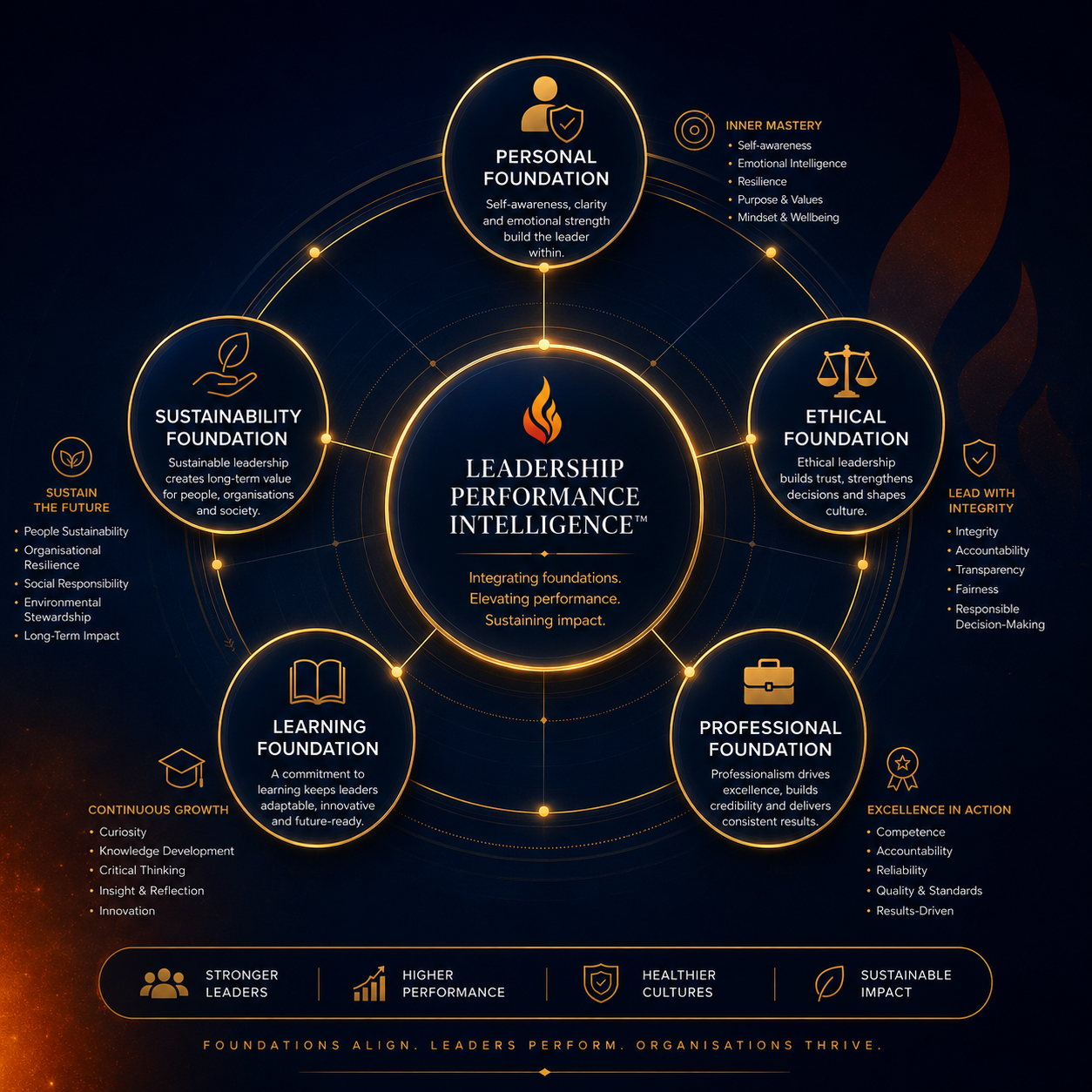
Burn Bright Advisory proposes five interconnected foundations that underpin sustainable leadership excellence.
Foundation 1 Personal Foundation
Leadership begins with self-leadership. This includes:
- Self-awareness
- Emotional regulation
- Reflective practice
- Wellbeing
- Resilience
Without personal stability, organisational leadership becomes reactive.
Foundation 2 Ethical Foundation
Ethics should not operate separately from leadership. Ethics should guide every decision. Leaders with strong ethical foundations consistently ask:
- Is this fair?
- Is this sustainable?
- Does this align with our values?
- Who will this decision affect?
Ethics Intelligence™ transforms values from organisational statements into everyday behaviours.
Foundation 3 Professional Foundation
Professionalism establishes credibility. It includes:
- Accountability
- Consistency
- Communication
- Preparation
- Respect
- Reliability
Professional credibility creates organisational trust.
Foundation 4 Learning Foundation
High-performing organisations learn continuously. Knowledge Development Intelligence™ encourages leaders to remain students throughout their careers. Learning organisations demonstrate:
- Curiosity
- Experimentation
- Evidence-informed decisions
- Reflection
- Continuous improvement
Leaders who stop learning gradually reduce organisational adaptability.
Foundation 5 Sustainability Foundation
Leadership should be sustainable. Performance cannot continually increase while leader capacity continually decreases. Leadership Sustainability™ encourages leaders to manage:
- Workload
- Decision fatigue
- Emotional energy
- Recovery
- Delegation
- Long-term capability
Sustainable leadership protects both organisational performance and human wellbeing.
Case Studies: Foundations Leadership in Practice
Case Study 1 — Business: Building Capability Before Growth
A rapidly expanding technology company invested heavily in strategic planning. Revenue grew quickly. Employee engagement declined. Management turnover increased. Customer satisfaction plateaued.
An internal review identified a recurring issue: managers possessed excellent technical expertise but had received minimal leadership development.
Rather than introducing another performance management system, the organisation redesigned leadership development around foundational capability. Managers received structured development in reflective leadership, coaching conversations, ethical decision making, workload sustainability, and emotional intelligence.
Within eighteen months the organisation reported improved retention, stronger internal promotion rates, higher engagement, and more consistent customer experience.
Case Study 2 — Education: Creating Sustainable School Leadership
A secondary school experienced continual improvement initiatives. Each year introduced new curriculum priorities, revised assessment systems, additional reporting requirements, and greater accountability expectations.
Teachers became increasingly exhausted. Middle leaders struggled to balance operational requirements with educational leadership.
The senior leadership team adopted a Foundations Leadership approach centred upon reflective practice, shared leadership, professional learning communities, and sustainable workload management. Rather than introducing more initiatives, leaders simplified existing systems.
Improvement accelerated because staff capacity increased. Leadership quality improved by reducing unnecessary complexity.
Case Study 3 — Healthcare: Leading Through Complexity
Healthcare environments require rapid decisions under significant pressure. One regional healthcare organisation experienced increasing staff turnover despite strong clinical outcomes.
Leadership analysis identified decision fatigue, excessive meetings, fragmented communication, and limited reflection. Clinical leaders participated in Leadership Performance Intelligence™ development focused upon emotional intelligence, reflective debriefing, adaptive leadership, and collaborative decision making.
The outcome was not slower decision making.
It was better decision making.
Staff confidence improved. Collaboration strengthened. Patient experience improved alongside employee wellbeing.
Common Mistakes Organisations Make
Many organisations unintentionally weaken leadership capability by focusing primarily on visible outcomes.
Embedding Foundations Leadership in Your Organisation
Creating strong leadership foundations requires deliberate organisational commitment. Leaders should consider the following questions.
Recruitment
Do we recruit technical experts or future leaders?
Development
Do our leadership programmes strengthen capability or simply teach processes?
Performance
Do our appraisal systems reward sustainable leadership behaviours?
Culture
Does our culture encourage reflection and learning?
Succession
Are we intentionally developing future leadership capability?
Organisations answering “no” to several of these questions often experience recurring leadership problems despite repeated change programmes.
Reflection Questions
- Which leadership foundation represents your greatest strength?
- Which foundation requires the greatest development?
- How effectively do you balance organisational performance with leadership sustainability?
- Where do you rely on technical expertise rather than leadership capability?
- What one leadership habit would most improve your long-term effectiveness?
- How well does your organisation develop leadership before promotion?
- What systems encourage reflective practice within your team?
- How would your organisation benefit if every leader strengthened their Leadership Performance Intelligence™?
Action Steps
Over the next 30 days:
Week One
Conduct an honest assessment of your leadership foundations.
Week Two
Identify one leadership habit to improve.
Week Three
Introduce structured reflection into weekly leadership practice.
Week Four
Discuss leadership sustainability with your leadership team and identify one systemic improvement.
Long-term improvement begins through consistent small changes rather than isolated transformational events.
What is foundations leadership?
Foundations leadership develops the core capabilities that allow leaders to perform consistently under complexity and change.
What is Leadership Performance Intelligence™?
Leadership Performance Intelligence™ is Burn Bright Advisory’s integrated framework for sustainable leadership capability.
Why are leadership foundations important?
Leadership foundations improve judgement, resilience, ethics, adaptability and organisational performance.
What is the Leadership Foundation Pyramid?
The Leadership Foundation Pyramid is Burn Bright Advisory’s model of progressive leadership development, moving from personal leadership through professional and organisational leadership to sustainable leadership at the highest level.
How can organisations embed Foundations Leadership?
Organisations embed Foundations Leadership by reviewing recruitment, development, performance appraisal, culture, and succession planning to ensure each one strengthens leadership capability rather than simply rewarding activity.
Conclusion
Organisations frequently pursue increasingly sophisticated leadership solutions while overlooking the foundations upon which effective leadership depends.
Leadership Performance Intelligence™ offers a different perspective.
Leadership excellence is not built upon charisma.
It is not determined by hierarchy.
Nor is it sustained through effort alone.
It is developed through intentional capability across multiple interconnected domains — professionalism, ethics, reflection, adaptability, knowledge development, emotional intelligence, and leadership sustainability. These foundations strengthen not only individual leaders but entire organisations.
Every strategic decision, cultural initiative and organisational transformation ultimately depends upon the quality of leadership that supports it.
How Strong Are Your Leadership Foundations?
Complete the Leadership Burnout Self-Assessment to identify which of your leadership foundations are strong, which need development, and where sustainability may already be under pressure.
Free Leadership Intelligence
Get Weekly Leadership Insights
Join thousands of leaders receiving practical strategies on burnout prevention, workload design, and sustainable performance every week.