
Professionalism Intelligence™
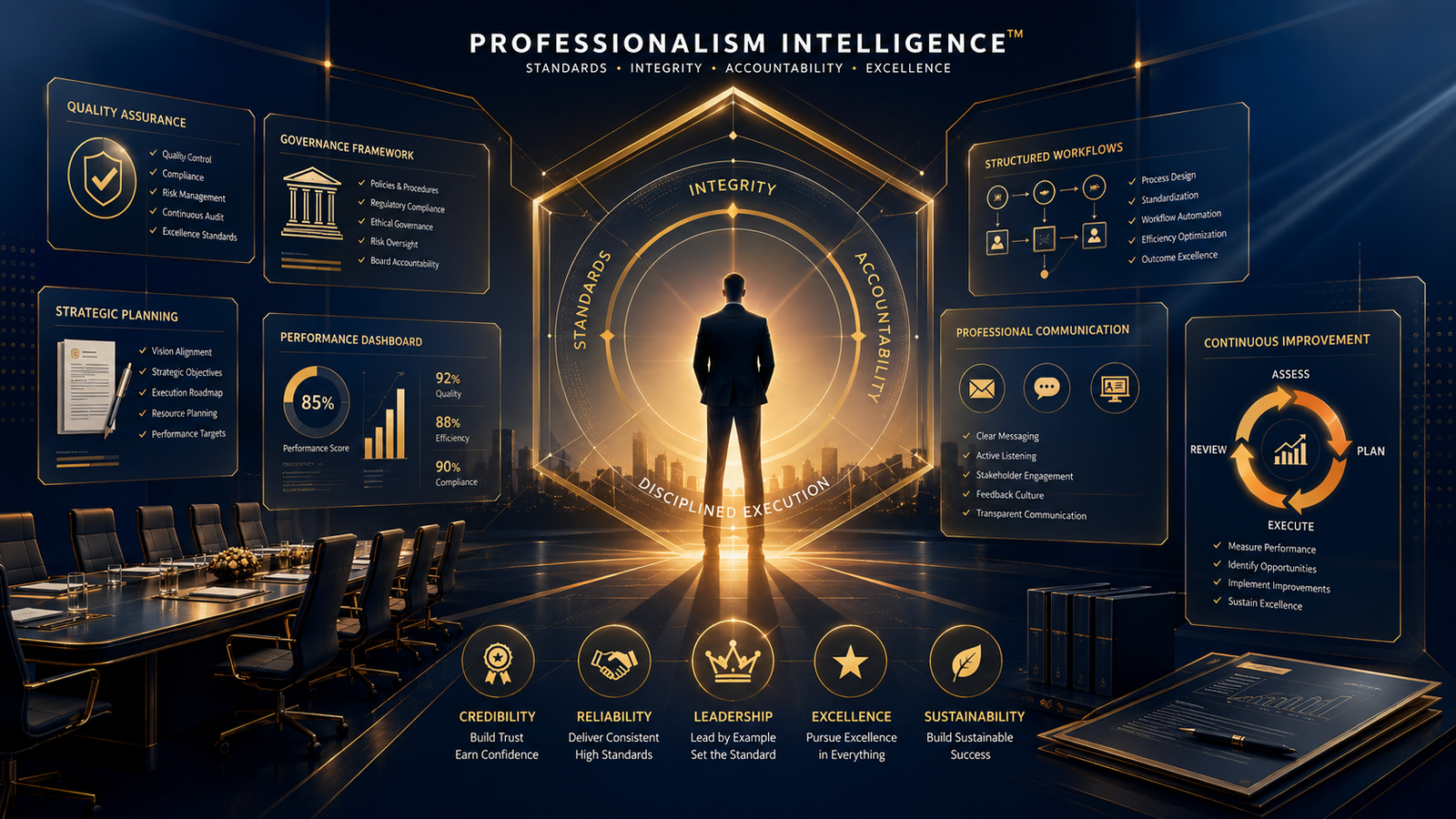
The foundation of sustainable leadership. How leaders show up, how they are experienced, and how consistently their behaviour reflects their stated values.
What Is Professionalism Intelligence™?
Why Professionalism Intelligence™ Matters
Every interaction a leader has sends a signal. About standards. About accountability. About what is and isn’t acceptable in this organisation. Leaders who operate with high Professionalism Intelligence create teams that mirror those standards. Leaders who operate inconsistently create confusion, erode trust and eventually lose the discretionary effort of the people they lead.
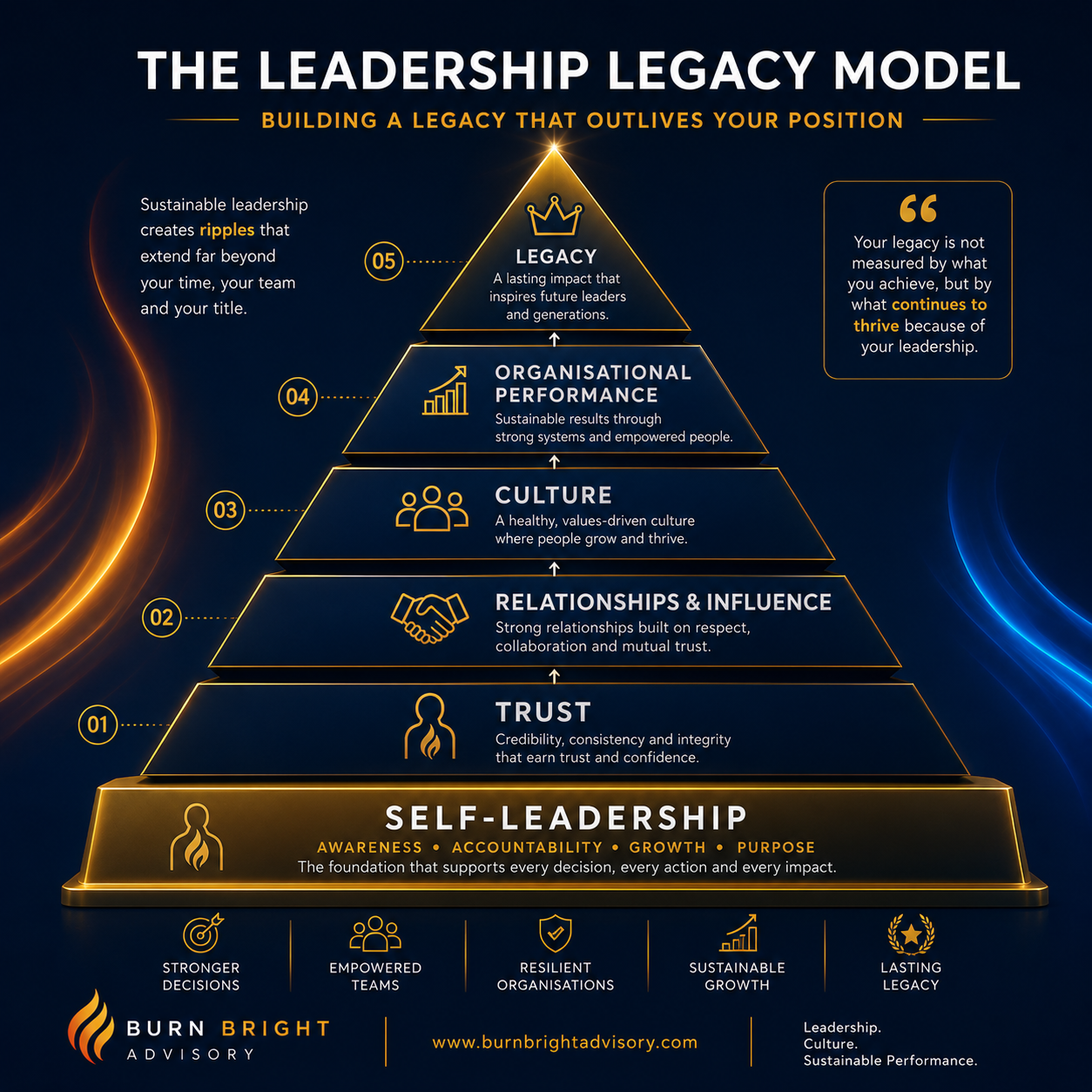
Professionalism Intelligence is the domain that makes all other leadership domains credible. It is impossible to build trust, develop others or lead change when the leader’s own behaviour is unpredictable or misaligned with their stated values.
Competence earns opportunities. Character earns trust. Professionalism Intelligence is what makes character visible and consistent.
Who Professionalism Intelligence™ Is For
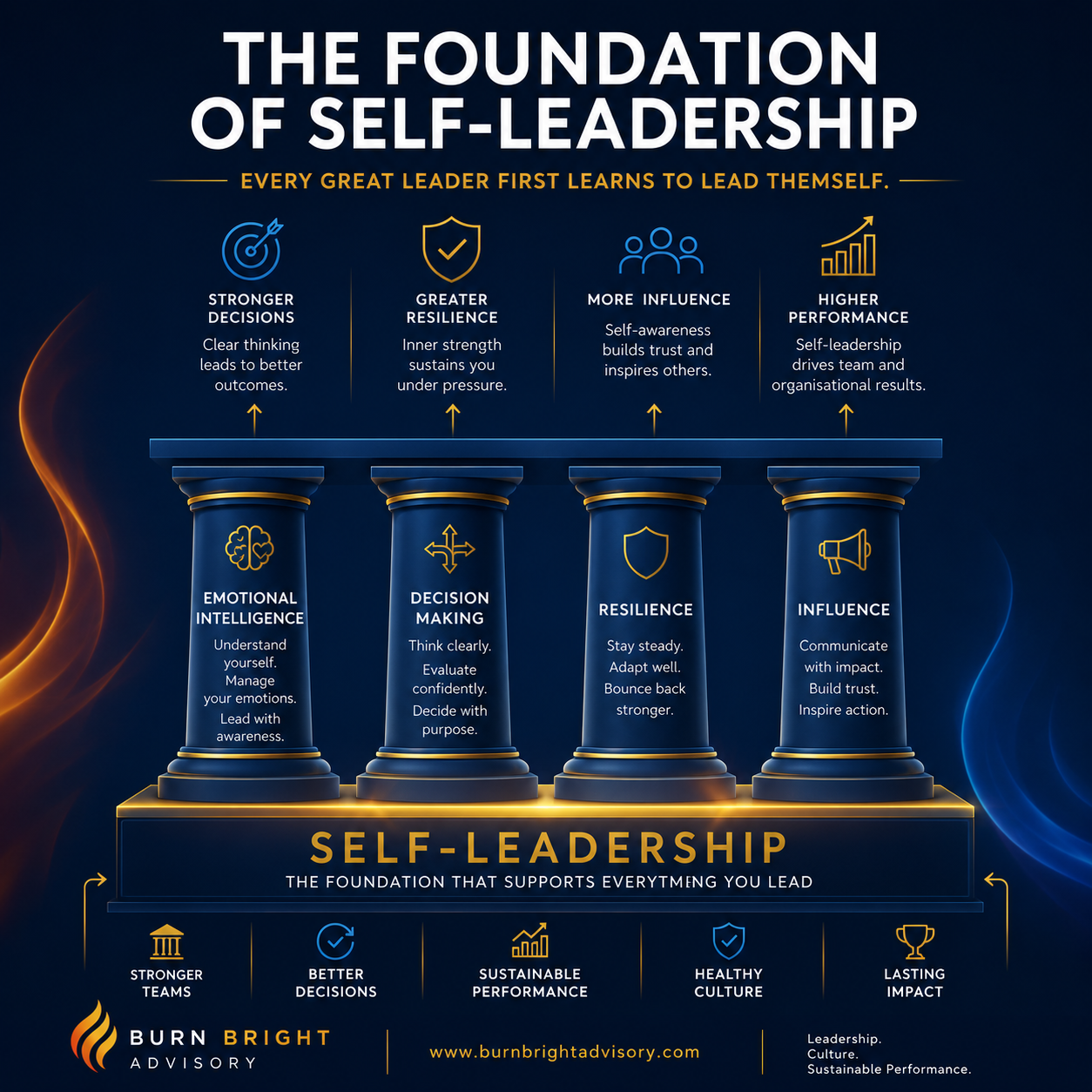
This domain is relevant to every leader — regardless of sector, experience level or role. Whether you are leading a classroom, a clinical team, a government department or a commercial organisation, the way you show up professionally sets the standard for everything around you.
It is particularly important for leaders who are new to a role, leading through significant change, or working to rebuild trust after a period of difficulty.
What High Professionalism Intelligence™ Looks Like
Leaders who score well in this domain consistently demonstrate the following behaviours across different contexts and pressures:
Behavioural Consistency
Their leadership behaviour does not change significantly based on audience, mood or pressure. People know what to expect from them.
Accountability Without Blame
They take ownership of outcomes — including negative ones — rather than deflecting or creating narratives that protect their position.
Confidentiality and Discretion
They handle sensitive information about people, performance and organisational issues with appropriate care and judgment.
Values-Aligned Decision Making
Their decisions — especially difficult ones — reflect stated organisational and personal values rather than convenience or self-interest.
Courageous Conversations
They have the conversations that need to happen — feedback, challenge, disagreement — rather than avoiding discomfort at the expense of clarity.
Emotional Regulation
They manage their own emotional responses under pressure, avoiding reactive behaviour that damages trust or models the wrong standard.
⚠️ Warning Signs — Low Professionalism Intelligence™
- Behaviour changes significantly depending on who is watching
- Blaming others or external factors when things go wrong
- Avoiding difficult conversations until situations escalate
- Sharing information that should remain confidential
- Making decisions that conflict with stated values under pressure
- Inconsistent standards — different rules for different people
- Emotional outbursts or withdrawal that unsettles the team
How to Develop Professionalism Intelligence™
Professionalism Intelligence is developed through intentional reflection and deliberate practice over time. It is not built through a single training event. The following strategies have the greatest impact:
1. Conduct a Behavioural Audit
Identify three situations in the past 90 days where your behaviour did not reflect your stated values. What drove the gap? What would you do differently?
2. Seek Structured Feedback
Ask two people who work closely with you to describe your leadership behaviour in specific situations. Listen without defending. Note patterns.
3. Define Your Non-Negotiables
Identify five specific leadership behaviours you will maintain regardless of context, pressure or difficulty. Write them down. Review them quarterly.
4. Practise Pause–Reflect–Respond
Before reacting to challenging situations, create a deliberate pause. Identify the emotion, assess the facts, then choose a response aligned with your values.
5. Model the Standard Publicly
When you make a mistake, acknowledge it openly to the relevant people. This single behaviour builds more trust than almost anything else a leader can do.
Professionalism Intelligence™ Across Sectors
🎓 Education
A Vice Principal who consistently models the standards they expect from staff — in meetings, corridor interactions and difficult parent conversations — creates a school culture that functions without constant oversight.
🏥 Healthcare
A clinical leader who acknowledges errors openly and leads post-incident reviews without blame builds the psychological safety that prevents future mistakes.
🏢 Business
An executive who maintains the same standards during a financial crisis as during a growth period demonstrates the character that earns long-term team loyalty.
🏛️ Public Sector
A public service leader who communicates difficult decisions transparently and takes accountability for outcomes builds the public trust that no policy document can manufacture.
👥 HR & People
An HR leader who handles sensitive employee information with absolute discretion and consistency becomes the person the organisation relies on during its most difficult moments.
🚀 Entrepreneur
A founder who maintains integrity in client relationships and internal culture — even when growth pressure tempts shortcuts — builds the reputation that becomes a competitive advantage.
Leadership Reflection Questions
- How consistent is my behaviour across different audiences and levels of pressure?
- When did I last take full accountability for something that went wrong without deflecting?
- Which leadership behaviours do I hold others to that I don’t consistently hold myself to?
- How do people experience my emotional regulation under pressure?
- What would the people closest to my leadership say about the gap between my stated values and my actual behaviour?
- Which difficult conversation have I been avoiding, and what is the cost of that avoidance?
Frequently Asked Questions
What is Professionalism Intelligence™?
Professionalism Intelligence™ is one of the nine domains measured by the Leadership Intelligence Compass™. It assesses how consistently and credibly a leader’s behaviour reflects their stated values — particularly under pressure.
Is Professionalism Intelligence™ the same as being formal or corporate?
No. Professionalism Intelligence™ is about behavioural integrity and consistency, not formality or appearance. A leader can be informal, warm and accessible while still demonstrating high Professionalism Intelligence.
How is Professionalism Intelligence™ assessed?
It is assessed as part of the Leadership Intelligence Compass™ Assessment — a 36-statement instrument that measures all nine domains and produces a personalised radar chart and development profile.
Can Professionalism Intelligence™ be developed?
Yes. It develops through intentional reflection, structured feedback, deliberate behavioural practice and coaching. It is not fixed — but it does require honest self-awareness as a starting point.
How does Professionalism Intelligence™ connect to burnout prevention?
Leaders with low Professionalism Intelligence often create additional organisational friction — through inconsistent standards, avoided conversations and misaligned decisions — that increases workload and stress across their teams. Developing this domain reduces that friction.
Measure Your Professionalism Intelligence™
Take the Leadership Intelligence Compass™ Assessment to see how you score across all nine domains — including a personalised radar chart and development recommendations.
Free Leadership Intelligence
Get Weekly Leadership Insights
Practical strategies on leadership development, burnout prevention and sustainable performance — every week.
The Leadership Intelligence Journey
Professionalism Intelligence™ is developed at every stage of the journey.
Explore All 9 Compass™ Domains