
Reflective Practice Intelligence™
How leaders learn systematically from their own experience — converting daily events into genuine insight, improved judgment and continuously developing leadership practice.
What Is Reflective Practice Intelligence™?
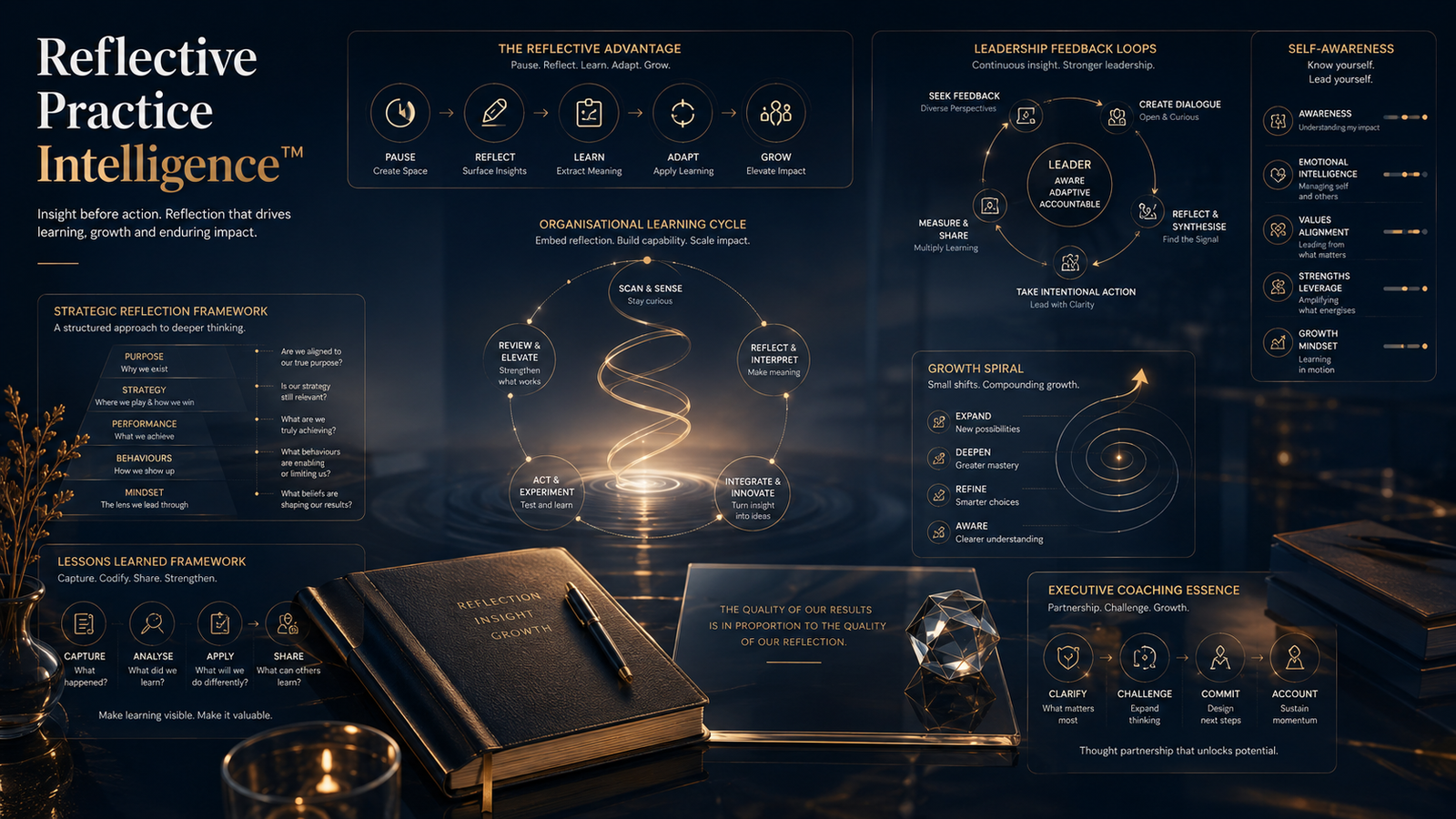
Why Reflective Practice Intelligence™ Matters
Experience is not the same as learning. Two leaders can have identical experience and develop very different levels of wisdom depending on how systematically they reflect on it. The leader who debriefs every significant event, examines their own assumptions, and actively seeks disconfirming feedback develops judgment that cannot be replicated by those who simply accumulate years.
Reflective Practice Intelligence is also the domain most directly linked to sustainable leadership. Leaders who reflect regularly identify burnout risk early, catch behavioural patterns before they damage relationships and make better decisions because they have genuinely processed their experiences.
The difference between experience and wisdom is reflection. Without it, twenty years of leadership is not twenty years of learning — it is one year of habits repeated twenty times.
Who Reflective Practice Intelligence™ Is For
Reflective Practice Intelligence is essential for any leader who wants to improve over time rather than simply accumulate experience. It is particularly important for leaders operating in complex, high-pressure environments where the cost of repeating mistakes is high.
What High Reflective Practice Intelligence™ Looks Like
Regular Structured Reflection
They invest deliberate time in reviewing their leadership practice — not as an occasional exercise but as a consistent professional habit.
Honest Self-Examination
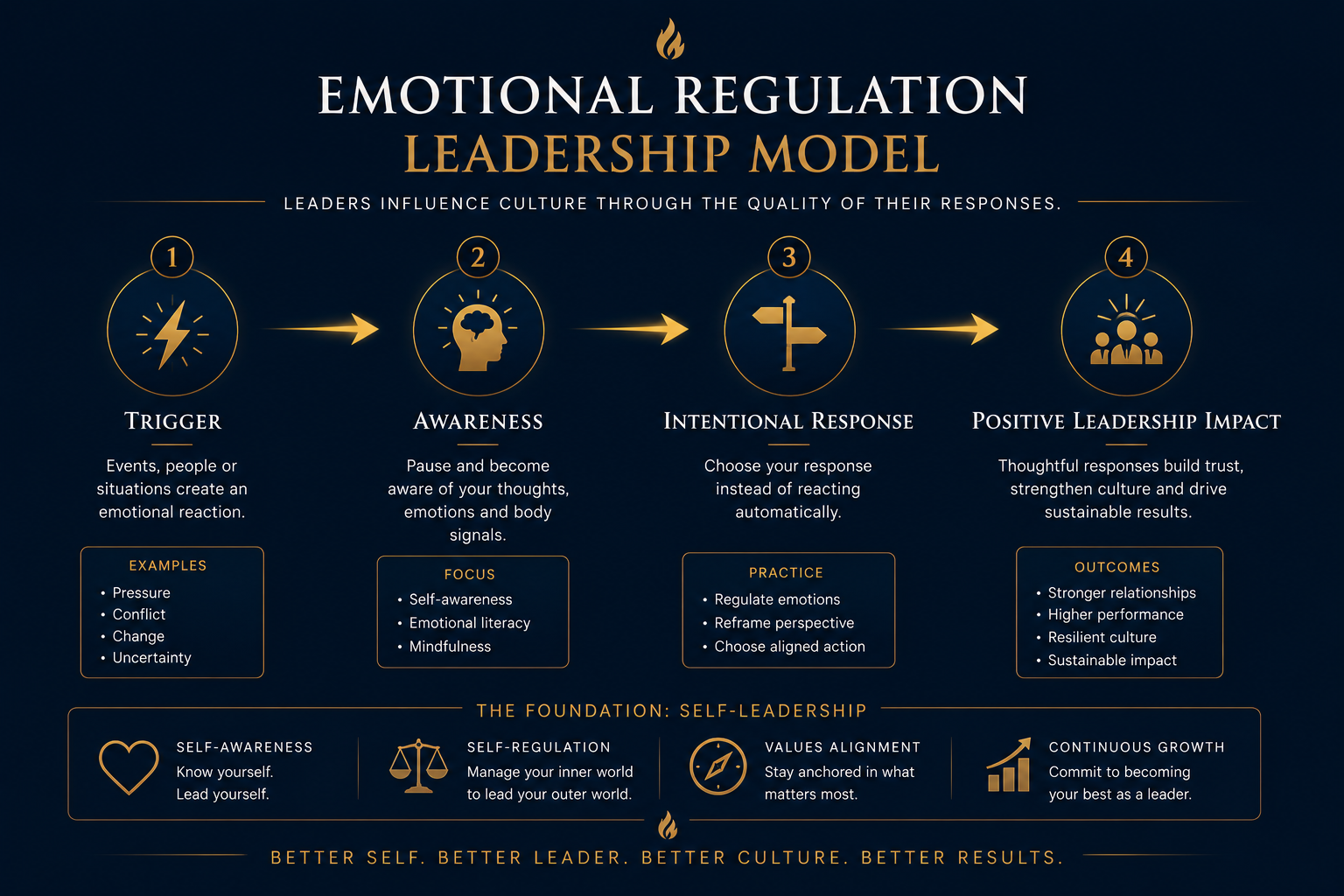
They examine their own assumptions, biases and emotional responses without defensive rationalisation — asking what was really happening rather than confirming what they already believe.
Actively Seeking Feedback
They create conditions where honest feedback is available — and they receive it without defensiveness, using it as data rather than as threat.
Connecting Reflection to Action
Their reflection produces specific behavioural changes — not just insight. They track what they have decided to do differently and whether those changes are taking effect.
Learning From Both Success and Failure
They reflect with equal rigour on what went well as on what went wrong — understanding the conditions for success as well as the causes of difficulty.
Contextual Awareness
They examine how external factors — context, culture, pressure, relationships — shaped outcomes, rather than attributing everything to individual choice or capability.
⚠️ Warning Signs
- Reviewing events only when something goes wrong rather than as a systematic practice
- Reflection that confirms existing beliefs rather than genuinely examining assumptions
- Avoiding feedback that might be uncomfortable or challenge self-perception
- Reflection that produces insight but no change in actual behaviour
- Confusing busyness for productivity and treating thinking time as avoidable
- Attributing outcomes entirely to external factors without examining personal contribution
How to Develop Reflective Practice Intelligence™
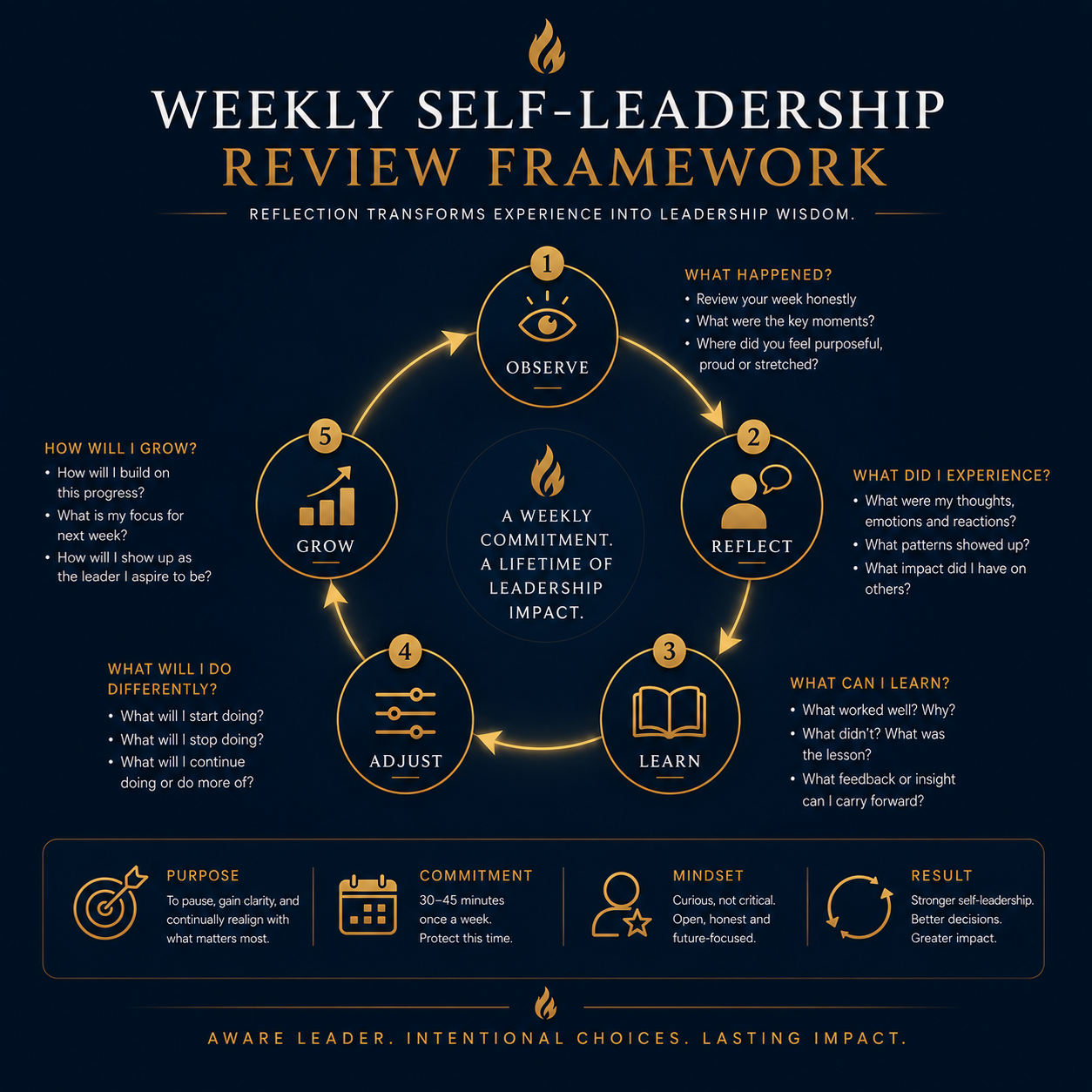
Establish a Weekly Reflection Ritual
Schedule 30 uninterrupted minutes each Friday to review the week. Ask: What worked? What didn’t? What did I learn? What will I do differently? Record responses and review them monthly.
Debrief Significant Events
After any significant leadership event — a difficult conversation, a decision under pressure, a team conflict — spend 15 minutes writing: What happened? What was I feeling? What did I do? What would I do differently?
Create a Feedback Mechanism
Identify two people who observe your leadership regularly and ask them directly quarterly: What is one thing I could do differently that would make your experience of working with me better?
Keep a Leadership Learning Log
Record one specific leadership insight each week — not a general observation but a specific learning that changes how you will approach a particular type of situation.
Review Past Decisions
Monthly, review three significant decisions you made in the previous 90 days. Were they right? What did you know? What did you miss? What would you decide differently now?
Reflective Practice Intelligence™ Across Sectors
🎓 Education
A school leader who conducts structured termly reviews of their leadership practice — and shares what they are working on with staff — models the reflective culture they are trying to build throughout the school.
🏥 Healthcare
A clinical leader who builds honest post-incident reflection into standard practice — rather than conducting it only after serious adverse events — creates the learning culture that protects patient safety.
🏢 Business
An executive who debriefs significant commercial decisions — including successful ones — builds the organisational learning capability that compounds over time into genuine competitive advantage.
🏛️ Public Sector
A public service leader who reflects systematically on policy implementation — rather than simply measuring outputs — builds the contextual understanding that improves future design.
👥 HR & People
An HR leader who reviews their own people decisions with the same rigour they apply to others’ builds the credibility and self-awareness that makes their advice genuinely useful.
🚀 Entrepreneur
A founder who builds honest retrospectives into their operating rhythm — rather than perpetually moving to the next thing — extracts the learning from experience that accelerates genuine business development.
Leadership Reflection Questions
- How systematic is my current reflective practice — and is it producing genuine behavioural change?
- What assumption about my leadership am I most reluctant to examine honestly?
- When did I last seek feedback that genuinely surprised me — and what did I do with it?
- What patterns in my leadership behaviour do I notice when I look back over the last six months?
- Which significant decision in the last quarter would I make differently with the benefit of hindsight?
- What is the most important thing I have learned about my leadership this year — and how has it changed my practice?
Frequently Asked Questions
What is Reflective Practice Intelligence™?
Reflective Practice Intelligence™ is one of nine domains in the Leadership Intelligence Compass™. It measures how effectively a leader examines their own practice, learns from experience and converts insight into improved leadership behaviour.
How is it different from self-awareness?
Self-awareness is the capacity to know yourself. Reflective Practice Intelligence™ is the active, systematic process of examining your leadership practice in order to improve it.
How much time should leaders invest in reflection?
Research on expert performance suggests quality matters more than duration. A focused 30-minute weekly review produces more development than occasional hours of general musing.
Can Reflective Practice Intelligence™ be developed?
Yes — through structured reflection habits, journaling, coaching, peer learning and any practice that creates honest examination of real leadership experience.
How is it assessed?
As part of the Leadership Intelligence Compass™ Assessment — a 36-statement instrument covering all nine domains.
Measure Your Reflective Practice Intelligence™
Take the Leadership Intelligence Compass™ Assessment to see how you score across all nine domains — including a personalised radar chart and development recommendations.
Free Leadership Intelligence
Get Weekly Leadership Insights
Practical strategies on leadership development, burnout prevention and sustainable performance — every week.
The Leadership Intelligence Journey
Every domain strengthens your progress along the full leadership journey.
Explore All 9 Compass™ Domains