Self-Leadership: The Foundation of Every Great Leader
Executive Summary
Introduction
Leadership is often viewed through the lens of influence, communication, vision, or strategic thinking. Organisations spend billions each year developing these capabilities, yet many leadership programmes begin in the wrong place.
They teach leaders how to manage others before teaching them how to manage themselves.
The consequence is visible across every sector. Technically capable leaders struggle with emotional regulation during periods of uncertainty. High-performing managers become overwhelmed by competing priorities. Experienced executives lose trust because their behaviours fail to reflect their stated values.
Leadership does not fail because people lack intelligence.
It fails because internal leadership determines external leadership.
Before a leader can inspire confidence in others, they must demonstrate consistency within themselves. Before they can create resilient teams, they must develop personal resilience. Before they can influence organisational culture, they must consciously shape their own habits, behaviours and mindset.
Why Self-Leadership Matters More Than Ever
Modern leadership has become significantly more demanding than it was a decade ago. Today’s leaders navigate:
- Continuous organisational change
- Hybrid working environments
- Increasing stakeholder expectations
- Rapid technological disruption
- Information overload
- Growing concerns around wellbeing and burnout
These challenges cannot be solved solely through technical expertise. They require leaders who remain composed under pressure, make thoughtful decisions amidst uncertainty, and maintain clarity despite constant distractions.
Exceptional leaders rarely possess fewer problems than everyone else.
They simply possess stronger internal operating systems.
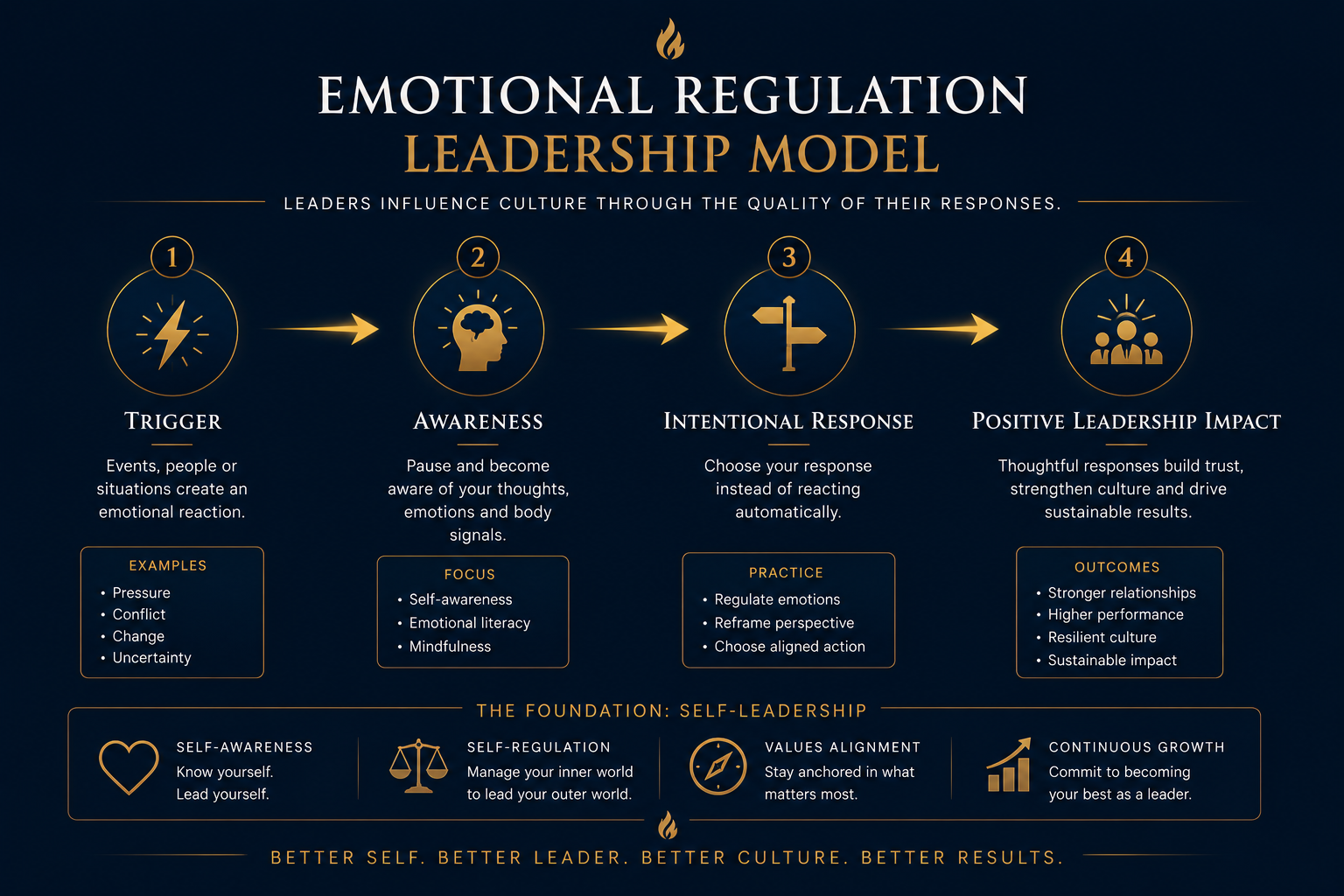
Self-leadership becomes that operating system. Rather than reacting impulsively to every challenge, self-led leaders respond intentionally. They create space between stimulus and response, allowing better judgement to replace emotional reactivity. This single capability often distinguishes sustainable leadership from leadership burnout.
The Four Pillars of Self-Leadership
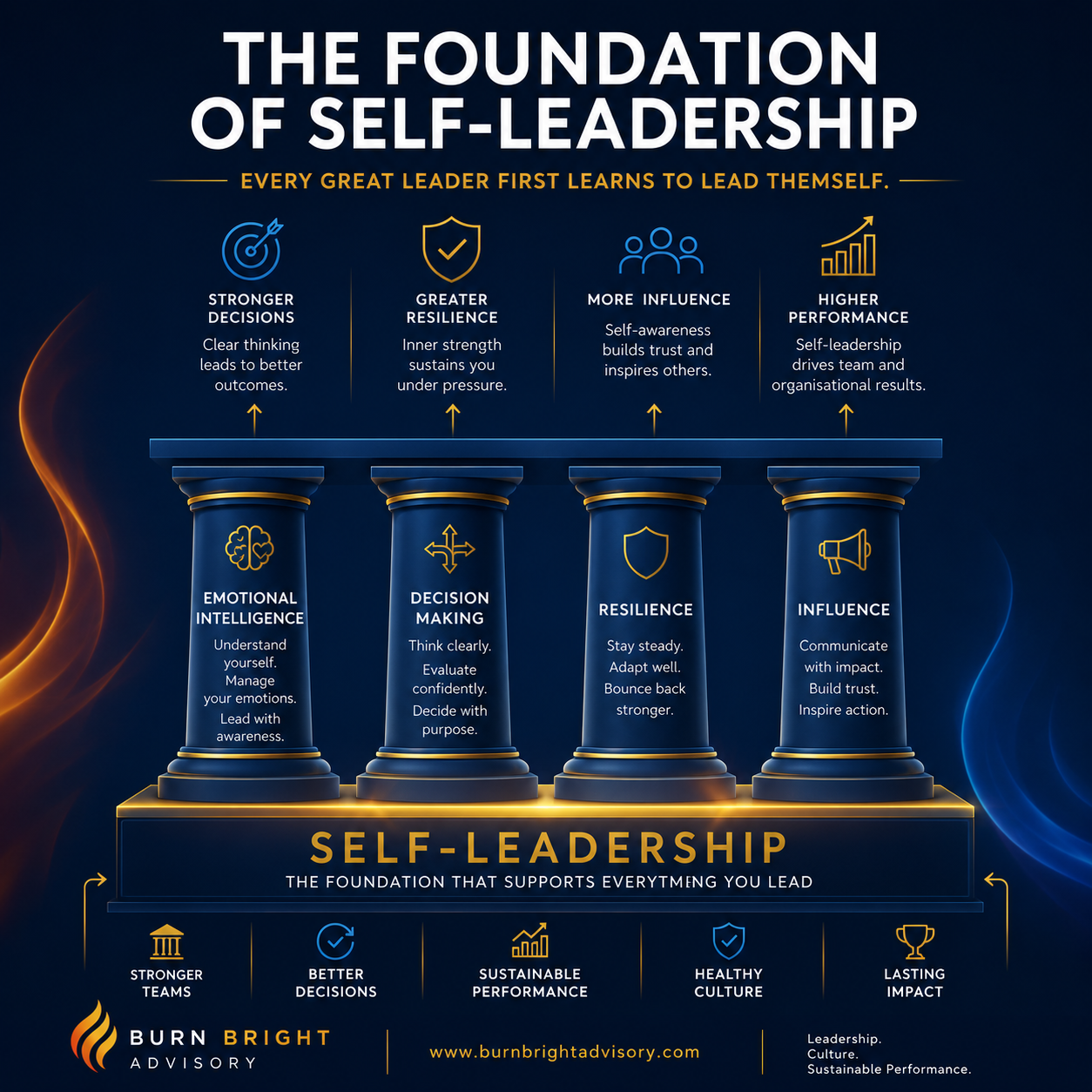
Self-leadership is best understood through four interconnected pillars. Each supports the others, creating a stable foundation for consistent leadership performance.
Pillar 1
Self-Awareness
Everything begins with awareness. Leaders who lack self-awareness often confuse confidence with competence or authority with influence. They rarely recognise how their behaviour affects others because they spend little time examining their own assumptions. Self-aware leaders continuously ask:
- What motivates my decisions?
- What emotional triggers influence my behaviour?
- How do others experience my leadership?
- Which habits strengthen my effectiveness?
- Which behaviours undermine trust?
Pillar 2
Self-Regulation
Leadership inevitably involves pressure. Budgets tighten. Projects fail. People disagree. Unexpected crises emerge. The question is not whether leaders experience pressure — it is how they respond to it. Self-regulation enables leaders to remain calm when others become reactive. Rather than allowing frustration to dictate conversations, emotionally intelligent leaders pause, assess, and respond with purpose.
Calm leadership creates calmer organisations.
Reactive leadership creates reactive cultures.
Pillar 3
Personal Accountability
High-performing leaders accept ownership long before assigning responsibility. Instead of asking “Who caused this?” they ask “What can I influence?” This mindset transforms leadership. Accountable leaders become solution-focused rather than blame-focused. They acknowledge mistakes openly, seek feedback and continuously improve rather than defend their position.
Perhaps most importantly, accountability creates trust. People willingly follow leaders who model responsibility far more readily than those who merely demand it from others.
Pillar 4
Intentional Growth
Leadership is never static. The world evolves. Organisations change. Technology advances. Markets shift. Leaders who stop learning quickly become limited by outdated assumptions. Intentional growth means developing a deliberate learning habit rather than relying solely on accumulated experience. The most effective leaders regularly invest time in:
- Reflection and coaching
- Reading and mentoring
- Experimentation and feedback
- Continuous professional development
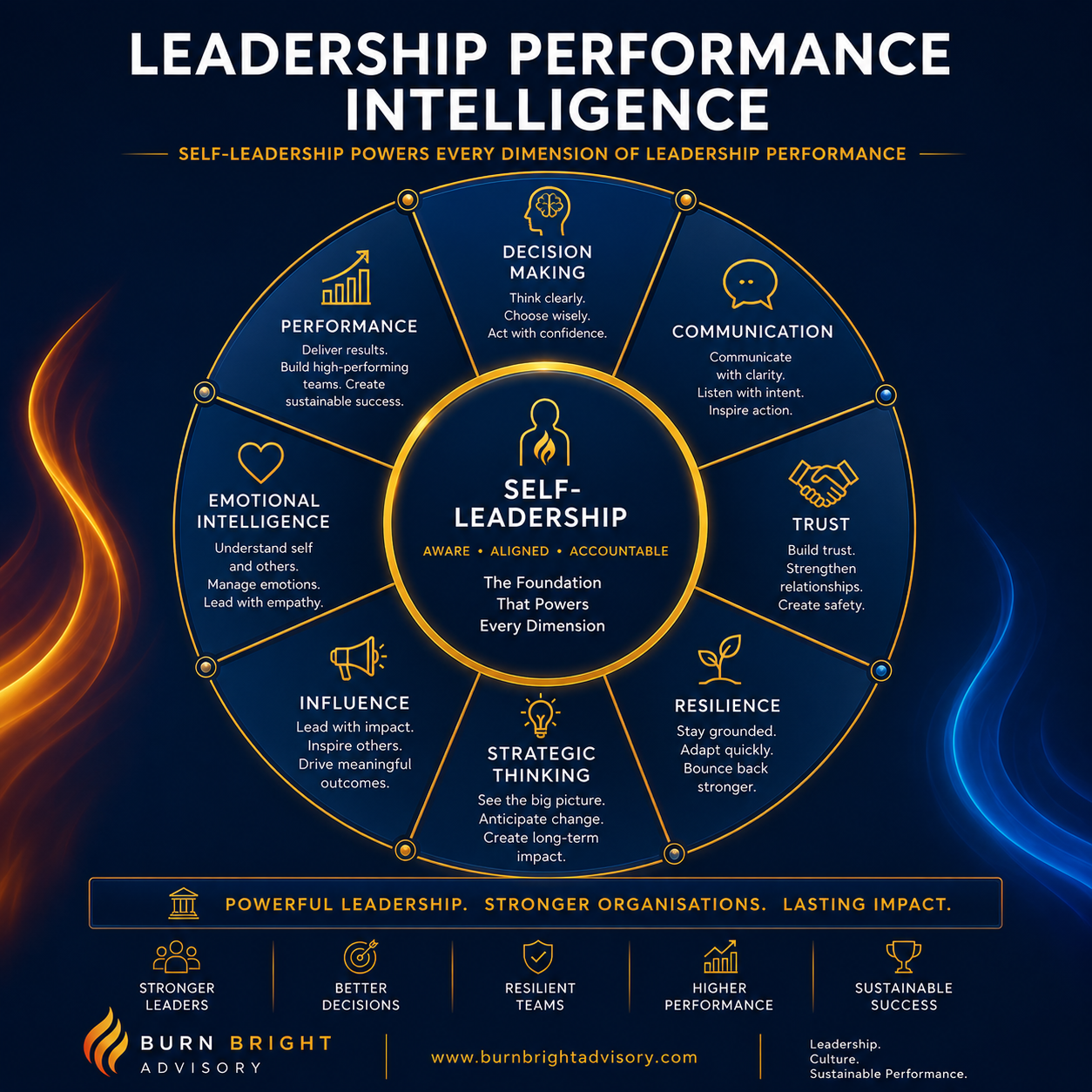
Leadership Performance Intelligence Begins Within
Many organisations measure leadership through visible outcomes — revenue, performance, engagement scores, promotion rates. While these indicators matter, they represent the results of leadership, not its source.
Leadership Performance Intelligence begins much earlier. It begins with how leaders think, how they regulate emotions, how they interpret challenges, how they make decisions, and how consistently they align actions with values.
This explains why two leaders can possess identical qualifications yet produce dramatically different organisational cultures.
One creates trust. The other creates fear.
One develops people. The other controls them.
One inspires innovation. The other unintentionally suppresses it.
From Management to Leadership
Many managers become overwhelmed because they focus almost exclusively on controlling external circumstances. They attempt to manage every conversation, every meeting, every decision, every project, every outcome.
Exceptional leaders recognise a more powerful principle:
This shift changes everything. Instead of chasing certainty, leaders build adaptability. Instead of protecting authority, they cultivate credibility. Instead of reacting to every challenge, they develop the internal capacity to lead through uncertainty with confidence.
That transformation begins not with a new organisational strategy, but with a personal commitment to lead yourself first.
Practical Frameworks for Building Self-Leadership
Understanding self-leadership is only the beginning. Lasting leadership performance comes from intentionally practising behaviours that strengthen your internal leadership every day. Rather than searching for one transformational moment, exceptional leaders create hundreds of small, deliberate habits that compound over time.
Framework 1 The Daily Leadership Check-In
Before opening emails or attending meetings, spend five minutes asking yourself five questions:
- What matters most today?
- How do I want people to experience my leadership today?
- What challenges might trigger an emotional reaction?
- Which conversation deserves my full attention?
- What would success look like by the end of the day?
This simple exercise shifts leaders from reacting to events towards intentionally leading them. Many leaders begin the day allowing their inbox to determine priorities. Self-led leaders begin with purpose before allowing external demands to compete for their attention.
Framework 2 Pause – Reflect – Respond
High-performing leaders rarely make their best decisions under emotional pressure. Instead, they create a deliberate gap between stimulus and response.
- Pause — Recognise the emotional trigger
- Reflect — Ask: What facts do I know? What assumptions am I making? What outcome am I trying to achieve?
- Respond — Choose the behaviour that aligns with your values rather than your emotions
Although this process may take only seconds, it often prevents decisions that damage trust, relationships and organisational culture.
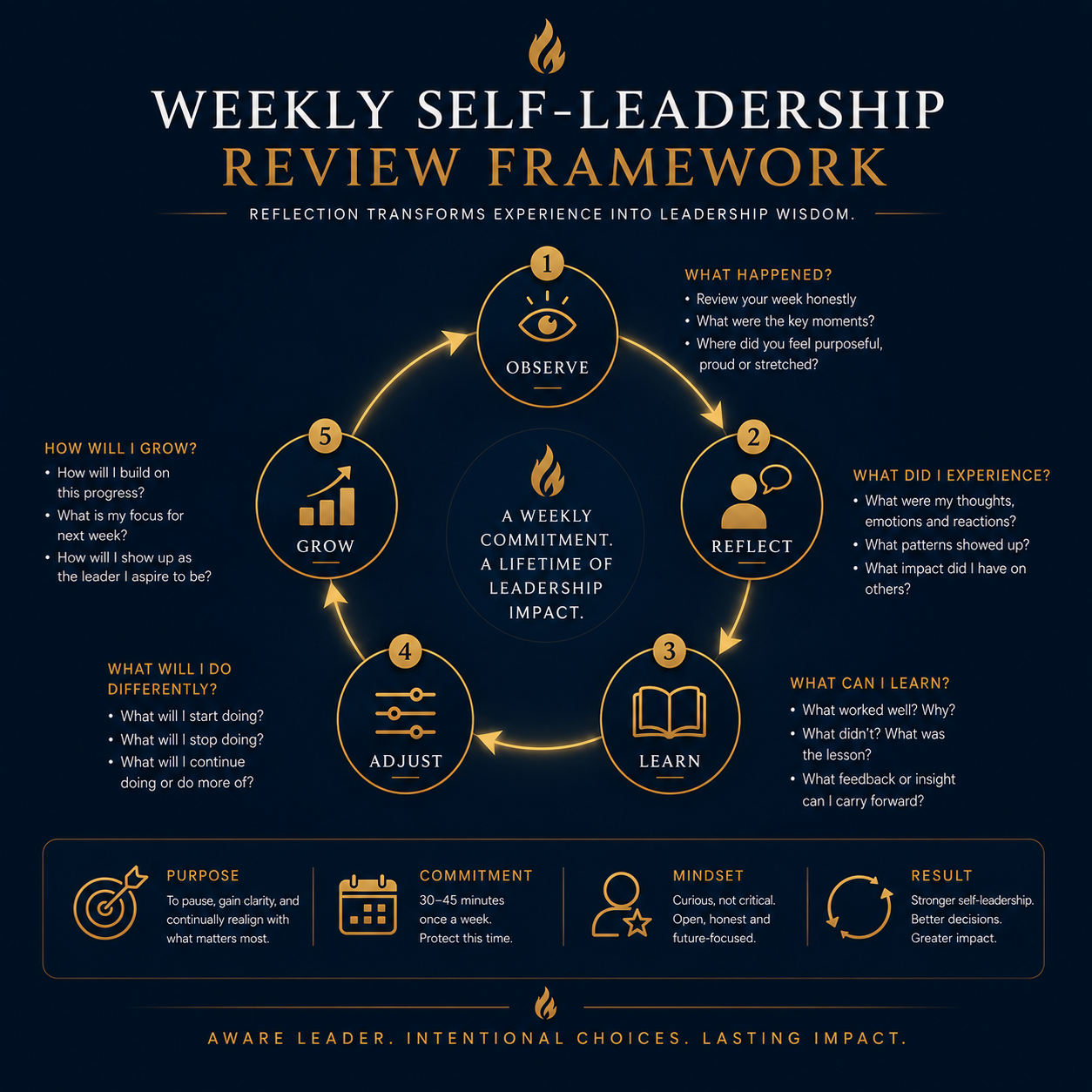
Framework 3 Weekly Leadership Reflection
Continuous improvement requires continuous reflection. Schedule thirty minutes each week to review your leadership. Ask yourself:
- Where did I lead well this week?
- When did I react rather than respond?
- Which conversations could I have handled better?
- What feedback did I receive?
- What will I intentionally improve next week?
Reflection transforms experience into wisdom. Without reflection, leaders simply repeat the same experiences.
Self-Leadership Across Every Sector
Although leadership roles differ, the foundations of self-leadership remain remarkably consistent.
🏢 Business
Successful executives recognise that people follow credibility before authority. When leaders remain calm during market uncertainty, communicate honestly during organisational change and admit mistakes openly, confidence grows throughout the business. Trust becomes a competitive advantage.
🏥 Healthcare
Healthcare professionals make thousands of decisions under immense pressure. Clinical expertise is essential, but emotional regulation is equally important. A leader who remains composed during emergencies creates psychological safety, enabling clearer communication and better patient outcomes.
🎓 Education
Schools and universities depend on relationships. Teachers observe leaders continuously. Students experience organisational culture every day. Educational leaders who demonstrate consistency, humility and accountability create learning environments where both staff and students flourish.
🏛️ Public and Third Sector
Community leadership requires resilience. Public expectations continue to rise while resources remain constrained. Leaders who maintain purpose despite political, financial and organisational pressures provide stability during uncertainty. Their influence extends well beyond organisational boundaries.
Common Barriers to Self-Leadership
Even experienced leaders struggle to develop self-leadership because several common obstacles repeatedly emerge.
Building a Sustainable Leadership Legacy
Leadership is measured less by the number of decisions made than by the people developed.
Titles eventually disappear.
Projects conclude.
Strategies evolve.
Organisations transform.
What remains is influence.
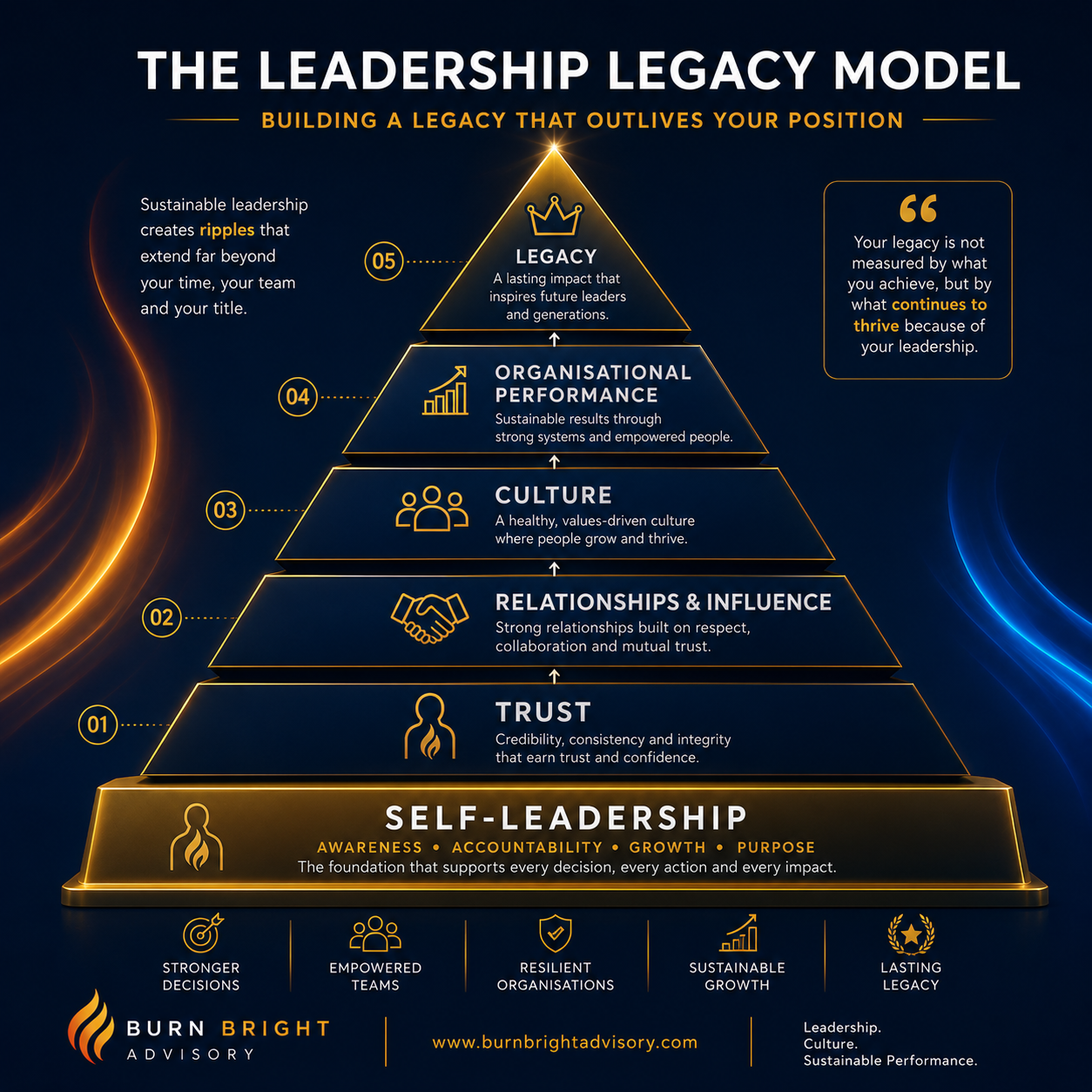
Leaders who invest in self-leadership create cultures where integrity, accountability and continuous learning become normal behaviours rather than management initiatives. Their legacy extends beyond organisational performance. It becomes embedded within the people they lead.
Leadership Reflection Questions
- How intentionally do I lead myself before leading others?
- Which behaviours consistently strengthen trust within my team?
- What emotional triggers most influence my leadership decisions?
- How often do I seek honest feedback?
- Which personal habits improve my leadership performance?
- What legacy am I creating through my daily behaviours?
- Where do my actions align — or fail to align — with my stated values?
- What is one leadership habit I will intentionally improve this month?
Practical Action Steps
Over the Next Seven Days
- Complete a five-minute leadership check-in every morning
- Schedule one weekly reflection session
- Ask one trusted colleague for constructive feedback
- Practise the Pause–Reflect–Respond framework during difficult conversations
- Identify one leadership habit that no longer serves you and replace it with a more intentional behaviour
- Read for at least fifteen minutes each day on leadership, psychology or performance
- Finish each day by recording one lesson learned
Frequently Asked Questions
What is self-leadership?
Self-leadership is the ability to intentionally manage your thoughts, emotions, behaviours and decisions to consistently perform at your best while positively influencing others.
Why is self-leadership important?
Because leadership effectiveness begins internally. Leaders who understand themselves make better decisions, build stronger relationships and create healthier organisational cultures.
Can self-leadership be learned?
Absolutely. Like any professional capability, self-leadership develops through deliberate practice, reflection and continuous learning.
How does self-leadership improve team performance?
Self-led leaders create trust, psychological safety and consistency, encouraging greater collaboration, innovation and accountability.
Is emotional intelligence the same as self-leadership?
No. Emotional intelligence forms an important part of self-leadership, but self-leadership also includes accountability, resilience, purpose, habits and intentional personal development.
How can leaders begin developing self-leadership today?
Start by increasing self-awareness through reflection, seeking feedback, clarifying personal values and practising intentional responses rather than emotional reactions.
Conclusion
Exceptional leadership never begins with organisational charts, strategic plans or executive authority. It begins with character.
The most influential leaders are not those who control others most effectively but those who consistently lead themselves with clarity, integrity and purpose.
Self-leadership creates resilience during uncertainty.
It strengthens decision-making under pressure.
It builds trust through authenticity.
Most importantly, it provides the stable foundation upon which every other leadership capability depends. Leadership Performance Intelligence starts within. When leaders intentionally develop themselves, they create organisations where people feel valued, empowered and inspired to perform at their best.
Discover Your Leadership Burnout Risk
Understanding your self-leadership foundations is the first step towards sustainable performance. Take the free assessment to identify where to focus next.
Free Leadership Intelligence
Get Weekly Leadership Insights
Join thousands of leaders receiving practical strategies on burnout prevention, workload design, and sustainable performance every week.