
Emotional Intelligence™
How leaders understand and manage their own emotions — and how effectively they recognise, understand and respond to the emotions of the people they lead.
What Is Emotional Intelligence™?
Why Emotional Intelligence™ Matters
Every leadership interaction has an emotional dimension. Decisions create anxiety. Change creates fear. Feedback creates vulnerability. Leaders who are unaware of these dynamics — in themselves or in others — consistently underperform those who can navigate them with skill.
Emotional Intelligence is the domain most directly linked to trust, team safety and leader credibility. Research across sectors consistently demonstrates that emotional intelligence predicts leadership effectiveness more reliably than technical expertise — particularly in roles involving significant people responsibility.
Technical expertise earns a leadership role. Emotional Intelligence determines how effectively it is performed. No amount of strategic intelligence compensates for the damage done by poor emotional leadership.
Who Emotional Intelligence™ Is For
Emotional Intelligence is essential for any leader with significant people responsibility. It becomes increasingly critical as leadership scope expands and as the complexity of the interpersonal environment increases.
What High Emotional Intelligence™ Looks Like
Self-Awareness Under Pressure
They know how their emotional state affects their thinking and behaviour — and can identify when pressure, fatigue or frustration is influencing their judgment.
Self-Regulation
They manage their emotional responses in ways that serve the leadership situation rather than expressing emotion reactively in ways that damage trust or safety.
Empathic Accuracy
They accurately read how others are feeling — in conversations, in body language, in silences — and adjust their approach accordingly.
Emotional Climate Awareness
They are aware of the emotional climate of their team or organisation — noticing when anxiety, disengagement or conflict is building before it becomes visible in behaviour.
Emotionally Intelligent Communication
They communicate in ways that acknowledge emotion without being controlled by it — naming what is happening, creating safety and addressing both rational and emotional dimensions.
Compassionate Challenge
They combine genuine care for the people they lead with the willingness to challenge them — understanding that both are expressions of respect.
⚠️ Warning Signs
- Dismissing emotional responses as irrelevant to professional performance
- Reactive emotional behaviour that creates fear, uncertainty or instability in teams
- Misreading emotional signals — particularly negative emotions interpreted as personal attack
- Avoiding emotional dimensions of leadership conversations in favour of purely rational exchange
- Confusing emotional suppression with emotional regulation
- Creating environments where emotional expression is unsafe — driving problems underground rather than resolving them
How to Develop Emotional Intelligence™
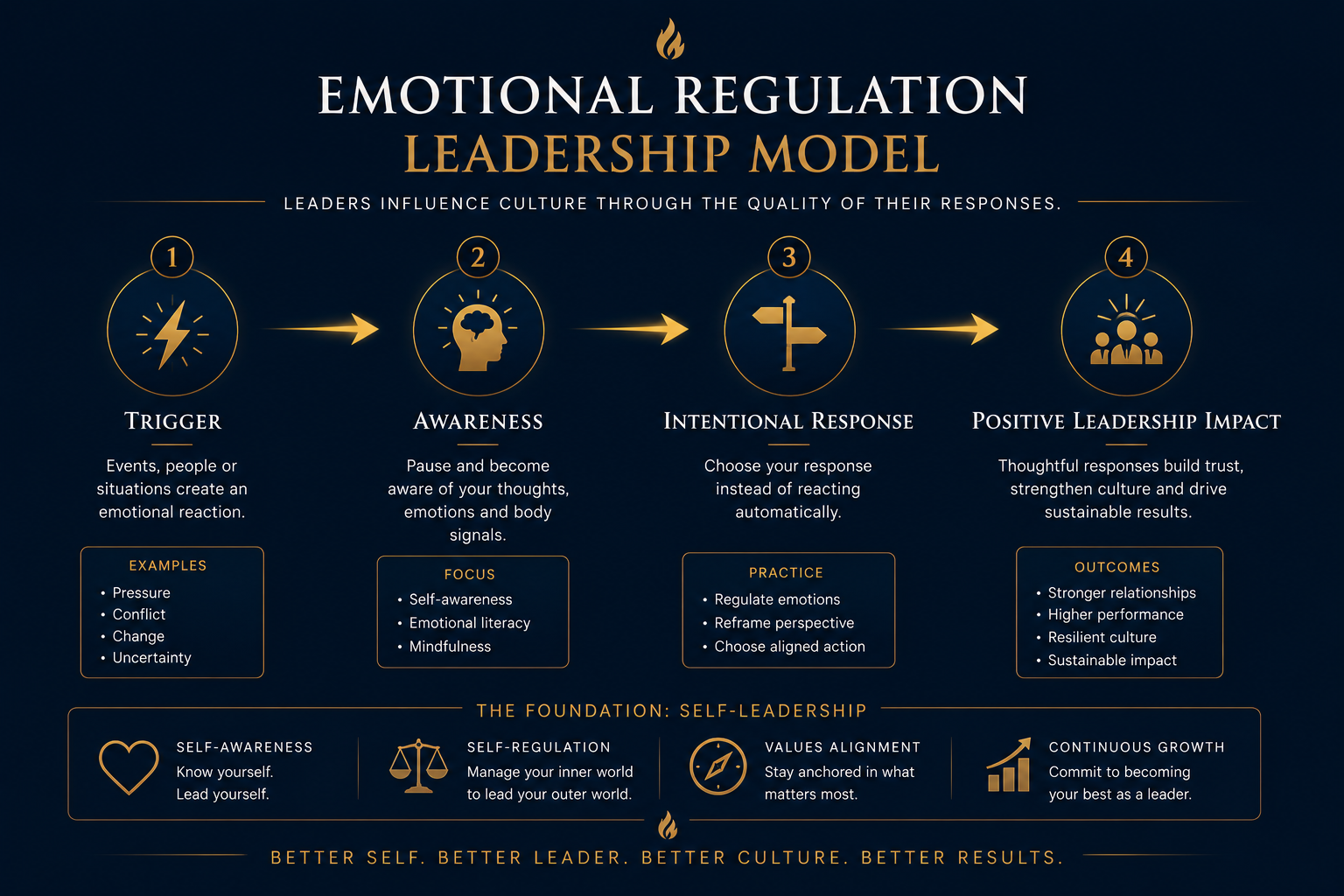
Map Your Emotional Triggers
Identify the three situations that most reliably trigger unhelpful emotional responses in your leadership. For each: what is the trigger? What is the emotion? What behaviour does it produce? What would you prefer to do instead?
Name-It-to-Tame-It
When you notice a strong emotional response, name it explicitly — to yourself, and where appropriate to others. Naming an emotion reduces its intensity and creates space for more considered response.
Build Your Empathic Observation Practice
In your next five team interactions, consciously observe the emotional signals others are sending — not just what they are saying. Notice body language, tone, energy and silence.
Create Emotional Safety Deliberately
Ask directly: How are people feeling about this project / decision / change? Then listen without defending. The quality of the answer tells you how safe people feel to be honest.
Develop Your Emotional Vocabulary
Expand the emotional language you use in leadership conversations beyond ‘fine’, ‘good’ and ‘frustrated’. Precision in emotional language dramatically improves the quality of difficult conversations.
Emotional Intelligence™ Across Sectors
🎓 Education
A school leader who reads the emotional climate of staff meetings accurately — noticing anxiety, disengagement or morale — and responds proactively prevents the escalation of difficulties that could have been addressed earlier.
🏥 Healthcare
A clinical leader who creates genuine emotional safety for staff to disclose errors, near-misses and concerns without fear builds the psychological safety that protects patient safety.
🏢 Business
An executive who accurately reads the emotional response of their leadership team to strategic announcements — and addresses the real concerns rather than the stated questions — builds the engagement that makes strategy work.
🏛️ Public Sector
A public service leader who acknowledges the emotional reality of working in an under-resourced, high-demand environment — rather than pretending it doesn’t exist — builds the trust that sustains team commitment.
👥 HR & People
An HR leader who conducts difficult conversations — redundancy, performance, conflict — with genuine empathy as well as procedural accuracy creates outcomes that are both legally sound and humanly dignified.
🚀 Entrepreneur
A founder who recognises and responds to the emotional impact of rapid growth, uncertainty and pressure on their team — rather than expecting everyone to simply absorb it — builds the trust and loyalty that scaling requires.
Leadership Reflection Questions
- Which emotional triggers most reliably produce unhelpful responses in my leadership — and what do I currently do about them?
- How accurately do I read the emotional states of the people closest to my leadership?
- When did I last create genuine space for people to express how they are feeling about something significant?
- How do I currently manage my emotional state during the most demanding periods in my leadership role?
- What would the people I lead say about the emotional safety of the environment I create?
- Where in my leadership practice do I most commonly avoid the emotional dimension in favour of purely rational exchange?
Frequently Asked Questions
What is Emotional Intelligence™ in the context of the Compass™?
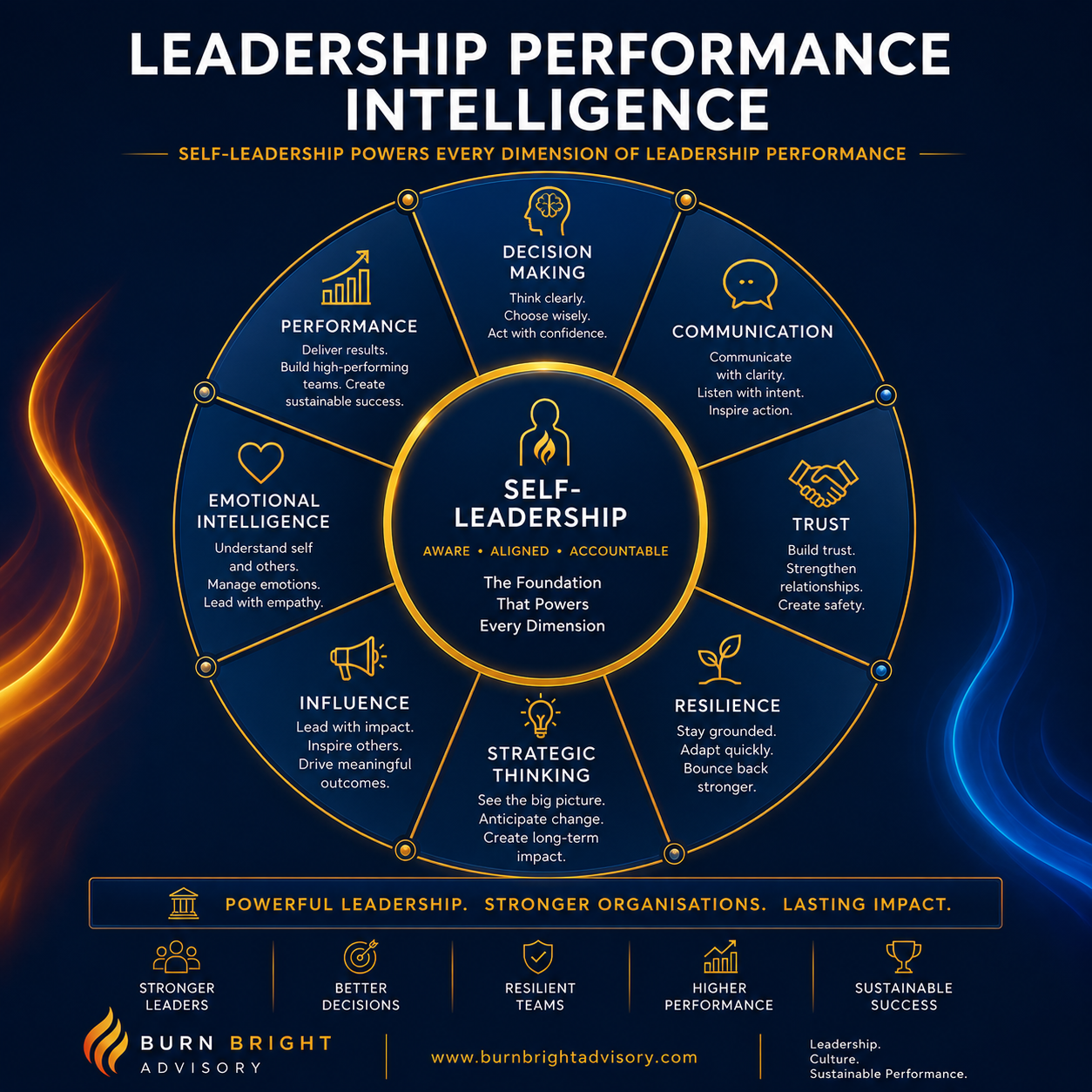
Emotional Intelligence™ is one of nine domains in the Leadership Intelligence Compass™. It measures a leader’s capacity to understand and manage their own emotional responses and to accurately read and respond to the emotions of others.
Is it the same as being empathetic?
Empathy is one component. Emotional Intelligence™ also includes self-awareness, self-regulation and the ability to use emotional understanding to make better leadership decisions.
Can it be developed?
Yes, significantly. Research consistently demonstrates that emotional intelligence is one of the most developable leadership capabilities — through coaching, structured reflection, deliberate practice and feedback.
How does it relate to burnout?
Low emotional intelligence often leads to either emotional suppression (which depletes energy over time) or reactive behaviour (which damages relationships and creates additional conflict) — both significant burnout drivers.
How is it assessed?
As part of the Leadership Intelligence Compass™ Assessment — a 36-statement instrument covering all nine domains.
Measure Your Emotional Intelligence™
Take the Leadership Intelligence Compass™ Assessment to see how you score across all nine domains — including a personalised radar chart and development recommendations.
Free Leadership Intelligence
Get Weekly Leadership Insights
Practical strategies on leadership development, burnout prevention and sustainable performance — every week.
The Leadership Intelligence Journey
Every domain strengthens your progress along the full leadership journey.
Explore All 9 Compass™ Domains