Quick Answer
Key Takeaways
- Leadership Performance Intelligence™ treats leadership as one integrated system, not a collection of isolated competencies.
- The Leadership Intelligence Compass™ connects nine interconnected intelligence domains.
- Leadership intelligence explains why similarly qualified leaders can produce very different organisational outcomes.
- Leadership failures rarely come from one bad decision — they build up through interconnected weaknesses over time.
- Organisations that develop leadership intelligence create advantages that competitors struggle to imitate.
Foundations of Leadership Performance Intelligence™: Why Modern Leadership Requires a New Operating System
Executive Summary
Leadership has never been more complex. Organisations now expect leaders to manage rapid technological change, competing stakeholder expectations, workforce wellbeing, organisational performance, innovation, governance, and continuous transformation — often simultaneously. Traditional leadership models, built around authority, experience, or personality, are increasingly insufficient for navigating this complexity.
Leadership Performance Intelligence™ provides a more comprehensive alternative. Rather than viewing leadership as a collection of isolated competencies, it recognises leadership as an integrated system of intelligence domains that interact continuously to influence judgement, behaviour, organisational culture, and sustainable performance. Effective leadership is not determined by how much authority an individual possesses, but by how consistently they can make high-quality decisions while maintaining personal wellbeing, developing others, and strengthening organisational capability.
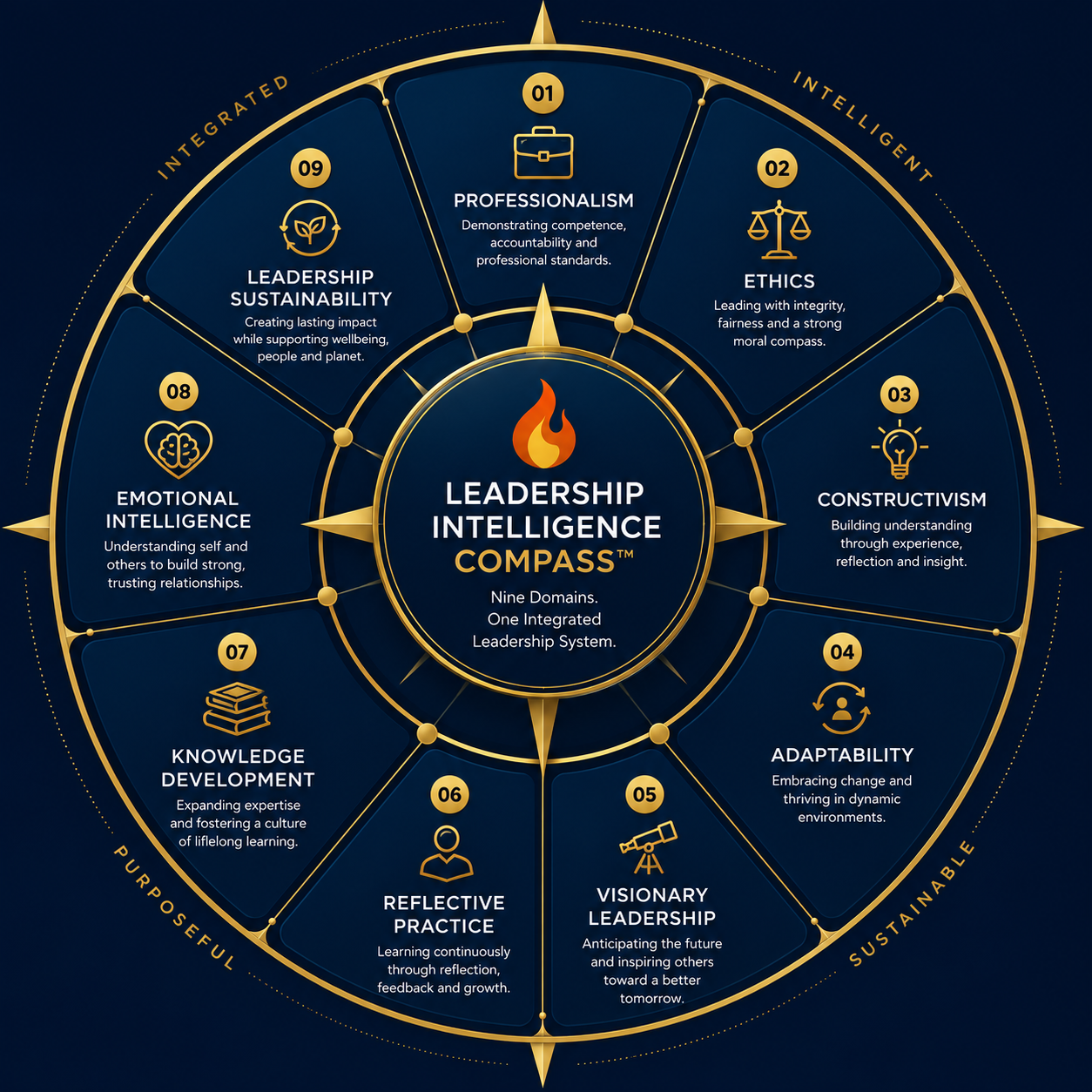
At the centre of this approach is the Leadership Intelligence Compass™, Burn Bright Advisory’s integrated framework for leadership development, connecting Professionalism Intelligence™, Ethics Intelligence™, Constructivism Intelligence™, Adaptability Intelligence™, Visionary Leadership Intelligence™, Reflective Practice Intelligence™, Knowledge Development Intelligence™, Emotional Intelligence™, and Leadership Sustainability™ into one practical model for continuous improvement.
Leadership Performance Intelligence™ also recognises that leadership cannot be separated from organisational systems. Leadership Workload™, Leadership Capacity™, Leadership Reflection™, Leadership Benchmarking™, and Leadership Sustainability™ operate together to determine whether leaders merely survive complexity or consistently create value for others.
Across business, education, healthcare, public services, and entrepreneurial environments, the same pattern emerges: organisations that invest in leadership intelligence outperform those that rely solely on technical expertise or positional authority. Sustainable leadership produces stronger cultures, better decision-making, improved employee engagement, greater innovation, and increased organisational resilience.
Introduction
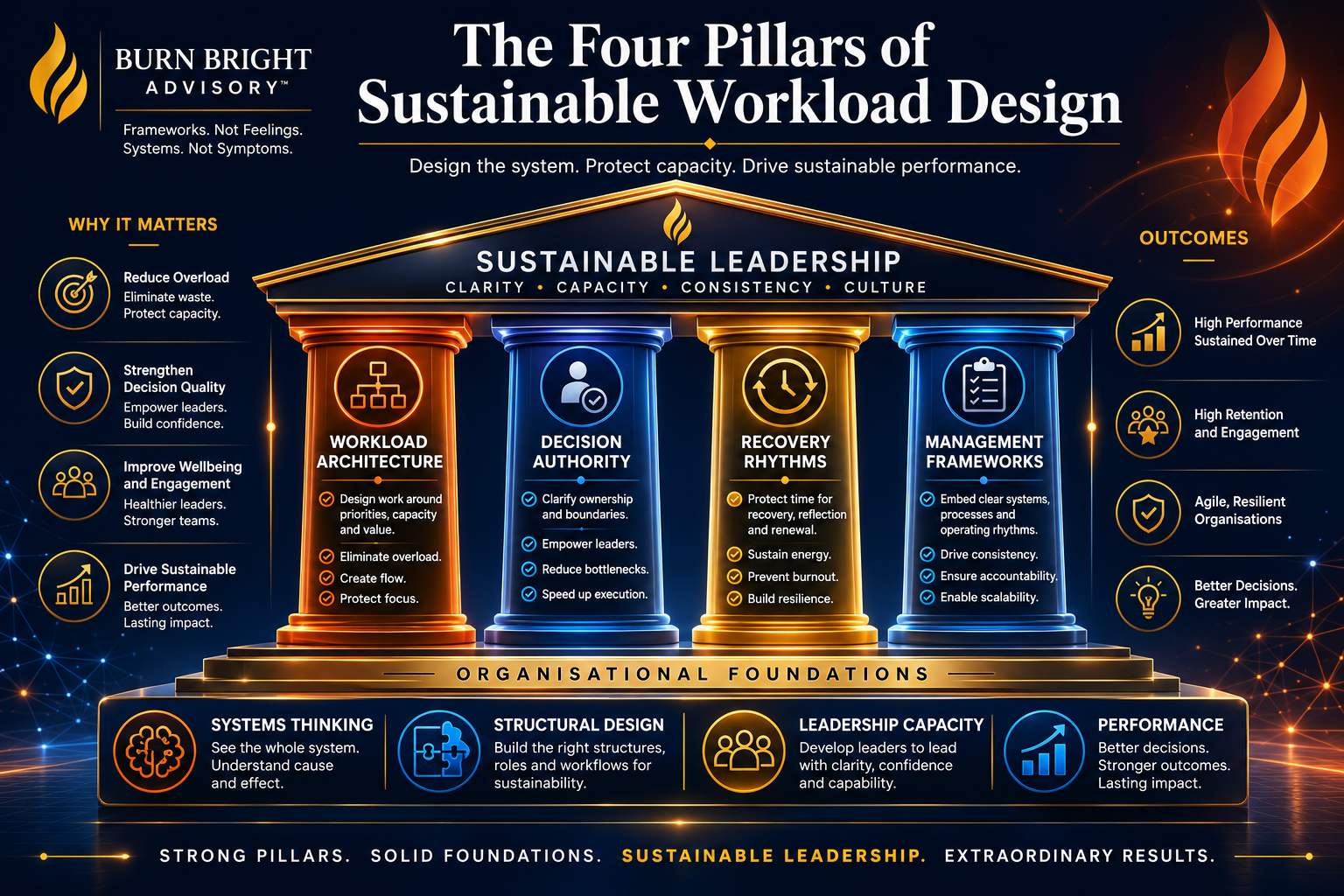
Leadership has become one of the most studied subjects in business, education, healthcare, government, and organisational psychology. Thousands of books, academic papers, executive programmes, and leadership frameworks promise to develop better leaders. Yet despite this unprecedented investment, organisations across every sector continue to experience increasing levels of leadership burnout, declining employee engagement, poor strategic execution, ethical failures, and widening capability gaps.
The challenge is not a shortage of leadership information.
It is a shortage of leadership intelligence.
For decades, leadership development has largely focused on acquiring individual competencies — communication, delegation, strategic thinking, coaching, emotional intelligence, financial literacy, negotiation, and decision-making. Each competency undoubtedly matters. However, organisations frequently discover that possessing these individual skills does not necessarily translate into consistently effective leadership.
Highly intelligent executives still make poor strategic decisions.
Experienced school leaders still struggle with organisational change.
Clinically outstanding healthcare professionals often find leadership more difficult than medicine.
Successful entrepreneurs frequently discover that building a business requires a different form of intelligence than leading one.
These examples reveal an important truth: leadership is not simply the application of isolated skills. Leadership is the interaction of multiple forms of intelligence operating simultaneously under conditions of complexity, uncertainty, competing priorities, and continuous change.
This is where Leadership Performance Intelligence™ offers a fundamentally different perspective. Rather than asking whether a leader possesses individual competencies, it asks a broader question: how effectively does the entire leadership system function under pressure?
Just as elite athletes are evaluated by more than strength alone, exceptional leadership depends on far more than technical expertise or positional authority. Sustainable leadership emerges from the interaction of professional judgement, ethical reasoning, emotional regulation, reflective practice, adaptability, knowledge development, strategic vision, and long-term leadership sustainability.
These capabilities cannot operate independently.
They strengthen — or weaken — each other continuously.
A leader may possess exceptional technical knowledge yet struggle with emotional regulation during organisational conflict. Another may communicate brilliantly but consistently make poor ethical decisions under commercial pressure. A third may inspire others while gradually exhausting their own leadership capacity through unsustainable workload practices.
Traditional leadership models often evaluate these characteristics separately. Leadership Performance Intelligence™ recognises them as one integrated leadership ecosystem.
Leadership Has Changed More in the Past Decade Than in the Previous Fifty Years
Modern leaders now operate within an environment defined by constant disruption. Digital transformation continues to reshape industries. Artificial intelligence is redefining decision-making and knowledge work. Hybrid working has altered organisational culture and collaboration. Economic uncertainty demands greater organisational agility. Employees increasingly expect leaders to demonstrate authenticity, empathy, transparency, and ethical responsibility rather than simply exercising authority.
Today’s leader is expected to deliver organisational performance, support employee wellbeing, build inclusive cultures, drive innovation, navigate technological change, manage organisational risk, lead transformation, develop future leaders, maintain ethical governance, and balance financial sustainability with social responsibility.
Each expectation is legitimate. Collectively, they create levels of complexity few traditional leadership models were designed to address.
Many leaders are working harder than ever while becoming progressively less effective.
Not because they lack commitment.
Not because they lack intelligence.
But because leadership itself has evolved faster than leadership development.
Moving Beyond Competency Frameworks
Many organisations continue to build leadership programmes around competency models. Competencies remain valuable because they define observable behaviours and measurable expectations. They provide clarity for recruitment, appraisal, succession planning, and professional development.
However, competencies alone rarely explain why two leaders with similar qualifications produce dramatically different organisational outcomes.
Consider two department directors. Both possess identical technical expertise. Both have completed executive leadership programmes. Both understand organisational strategy. Both communicate effectively. Yet one consistently creates engaged, innovative teams capable of adapting to uncertainty, while the other experiences high staff turnover, slow decision-making, and declining organisational performance.
The difference is rarely knowledge.
The difference is leadership intelligence.
Leadership intelligence determines how leaders integrate knowledge, values, judgement, reflection, emotional regulation, and adaptability into consistently effective action. It explains why leadership is not simply what people know — it is how intelligently they apply what they know under real-world conditions.
Introducing Leadership Performance Intelligence™
Leadership Performance Intelligence™ provides an integrated framework for understanding leadership as a dynamic capability rather than a fixed set of skills. It recognises that leadership effectiveness depends upon continuous interaction between multiple intelligence domains that together shape behaviour, judgement, organisational influence, and sustainable performance.
This integrated perspective is represented through the Leadership Intelligence Compass™, which brings together the essential dimensions of effective leadership into one coherent development system:
Compass The Nine Leadership Intelligences
- Professionalism Intelligence™ — maintaining standards, credibility, accountability, and professional judgement
- Ethics Intelligence™ — making principled decisions under pressure
- Constructivism Intelligence™ — enabling collaborative learning, innovation, and knowledge creation
- Adaptability Intelligence™ — responding effectively to uncertainty and change
- Visionary Leadership Intelligence™ — creating clarity, purpose, and strategic direction
- Reflective Practice Intelligence™ — learning continuously through structured reflection
- Knowledge Development Intelligence™ — transforming information into organisational capability
- Emotional Intelligence™ — understanding and managing emotions, relationships, and influence
- Leadership Sustainability™ — maintaining long-term leadership capacity without burnout
Individually, each domain contributes to leadership effectiveness. Collectively, they create a far more powerful system capable of sustaining high performance throughout an entire leadership career.
Leadership Performance Intelligence™ therefore shifts organisational thinking from developing individual competencies to strengthening the entire leadership operating system. The result is not simply better leaders. It is stronger organisations, healthier cultures, better decisions, greater resilience, and sustainable performance over time.
What Is Leadership Performance Intelligence™?
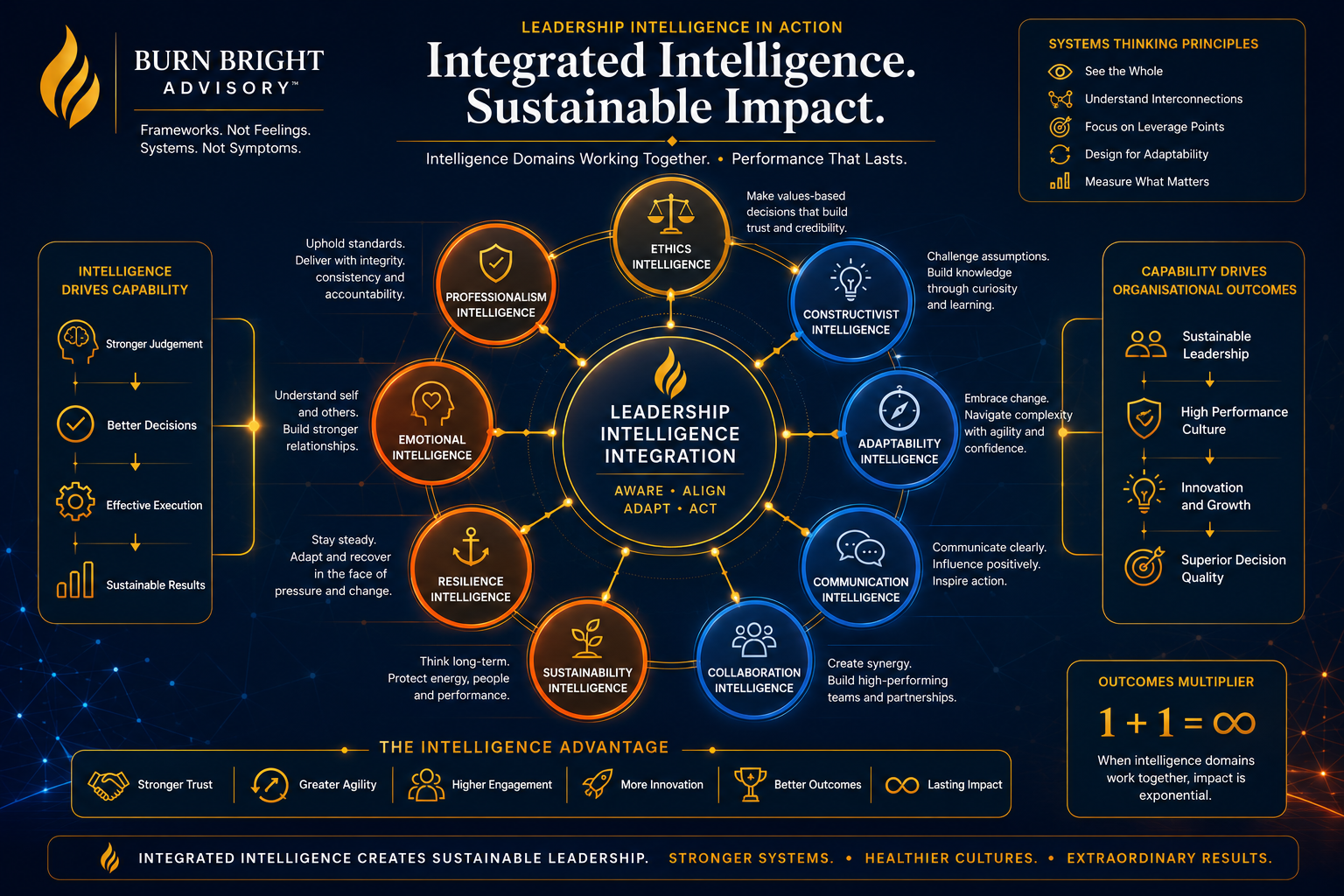
Leadership is often described as influence, vision, communication, or decision-making. While each of these descriptions captures part of the picture, none adequately explains why some leaders consistently create sustainable success while others struggle despite possessing similar qualifications, experience, or technical expertise.
Leadership Performance Intelligence™ begins with a different assumption. Leadership is not a collection of isolated competencies. It is the quality of the system that integrates those competencies into consistent, sustainable performance.
Leadership as an Integrated System
Traditional leadership development frequently resembles a toolkit. One programme teaches communication. Another develops strategic thinking. Another focuses on emotional intelligence. A separate workshop covers coaching or conflict resolution. Each improves an individual capability. Few explain how these capabilities work together under pressure.
Real leadership rarely presents problems in isolation. Consider a healthcare executive responding to an unexpected patient safety incident. The situation simultaneously requires ethical judgement, emotional regulation, professional credibility, rapid decision-making, strategic communication, team leadership, reflection, and organisational learning.
Failure in any one area weakens every other area.
Leadership Performance Intelligence™ recognises that these capabilities constantly interact. Like the instruments within an orchestra, leadership intelligence depends less on individual excellence and more on coordinated performance.
The Difference Between Leadership Competence and Leadership Intelligence
Competence answers an important question: can the leader perform the task? Leadership intelligence asks a far more valuable question: can the leader consistently make sound decisions while balancing competing priorities, protecting organisational capability, and maintaining sustainable performance?
This distinction becomes increasingly important as organisational complexity grows. Many organisations continue promoting individuals because they demonstrate technical competence — outstanding teachers become headteachers, excellent clinicians become department directors, high-performing sales professionals become commercial managers, experienced engineers become project executives.
Technical competence often earns promotion.
Leadership intelligence determines long-term success.
Without developing broader leadership intelligence, newly promoted leaders frequently experience role overload, decision fatigue, declining confidence, and eventually burnout.
The Nine Domains of the Leadership Intelligence Compass™
Rather than developing isolated leadership skills, the Compass strengthens nine interconnected intelligence domains.
Domain 1
Professionalism Intelligence™
Establishes the behavioural foundation of leadership.
- Accountability
- Reliability
- Professional judgement
- Integrity in practice
- Continuous improvement
- Personal credibility
Professionalism builds organisational trust. Without trust, leadership influence rapidly diminishes.
Domain 2
Ethics Intelligence™
Leadership decisions increasingly involve competing values rather than obvious right and wrong choices. This domain enables leaders to make principled decisions, balance stakeholder interests, protect organisational integrity, maintain transparency, and build ethical organisational cultures.
Ethical leadership is no longer a compliance issue. It is a competitive advantage.
Domain 3
Constructivism Intelligence™
High-performing organisations continuously learn. This domain focuses on creating environments where knowledge is developed collaboratively rather than simply transferred from leader to employee. Leaders become facilitators of organisational learning, creating conditions where better answers emerge collectively.
Domain 4
Adaptability Intelligence™
Modern leadership requires continuous adaptation to technological disruption, economic uncertainty, policy changes, artificial intelligence, and changing workforce expectations. This domain enables leaders to respond thoughtfully rather than react emotionally, transforming uncertainty into organisational capability.
Domain 5
Visionary Leadership Intelligence™
Vision is frequently misunderstood as predicting the future. Instead, effective visionary leadership creates clarity amid uncertainty — communicating strategic direction, building shared purpose, aligning priorities, and inspiring long-term commitment.
People rarely follow plans. They follow purpose.
Domain 6
Reflective Practice Intelligence™
One of the greatest differences between experienced leaders and exceptional leaders is not experience itself — it is how effectively they learn from experience, through regular evaluation of decisions, behaviours, outcomes, and assumptions.
Reflection transforms experience into expertise. Without it, leaders often repeat the same mistakes with increasing confidence.
Domain 7
Knowledge Development Intelligence™
Information alone creates little value. This domain enables leaders to convert information into insight, share knowledge effectively, build organisational capability, and encourage evidence-informed decision-making — turning knowledge into an organisational asset rather than an individual possession.
Domain 8
Emotional Intelligence™
Leadership remains fundamentally relational. This domain supports self-awareness, self-regulation, empathy, relationship management, psychological safety, and constructive communication — strengthening collaboration and building resilient organisational cultures.
Domain 9
Leadership Sustainability™
Perhaps the defining difference between traditional leadership and Leadership Performance Intelligence™ is the explicit inclusion of sustainability — protecting long-term capability through sustainable workload management, healthy professional boundaries, energy management, reflection, recovery, delegation, and continuous development.
Leadership should be renewable. Not consumable.
Leadership Intelligence Is Dynamic
One of the most important principles of Leadership Performance Intelligence™ is that intelligence is never static. Leaders continuously strengthen — or weaken — their capability through everyday decisions, difficult conversations, ethical dilemmas, strategic choices, and reflection.
Leadership intelligence develops through repeated practice rather than occasional training. This shifts leadership development away from isolated courses and towards continuous organisational learning.
Why Systems Thinking Matters
Leadership failures rarely result from one poor decision. They emerge through interconnected weaknesses accumulating over time. A leader experiencing excessive workload begins making rushed decisions. Poor decisions increase operational problems. Operational problems create staff frustration. Staff frustration reduces engagement. Reduced engagement increases turnover. Higher turnover further increases leadership workload.
The cycle repeats.
Traditional leadership models treat these as separate problems. Leadership Performance Intelligence™ recognises them as one interconnected leadership system. Improving one element strengthens the others. Ignoring one eventually weakens the whole system.
Leadership Performance Intelligence™ Creates Organisational Capability
Ultimately, organisations do not become exceptional because they employ exceptional individuals. They become exceptional because they build systems that consistently produce intelligent leadership.
Rather than asking leaders to become superheroes, Leadership Performance Intelligence™ equips them to become architects of sustainable performance — developing people, strengthening cultures, improving decision-making, and creating organisations capable of thriving in complexity.
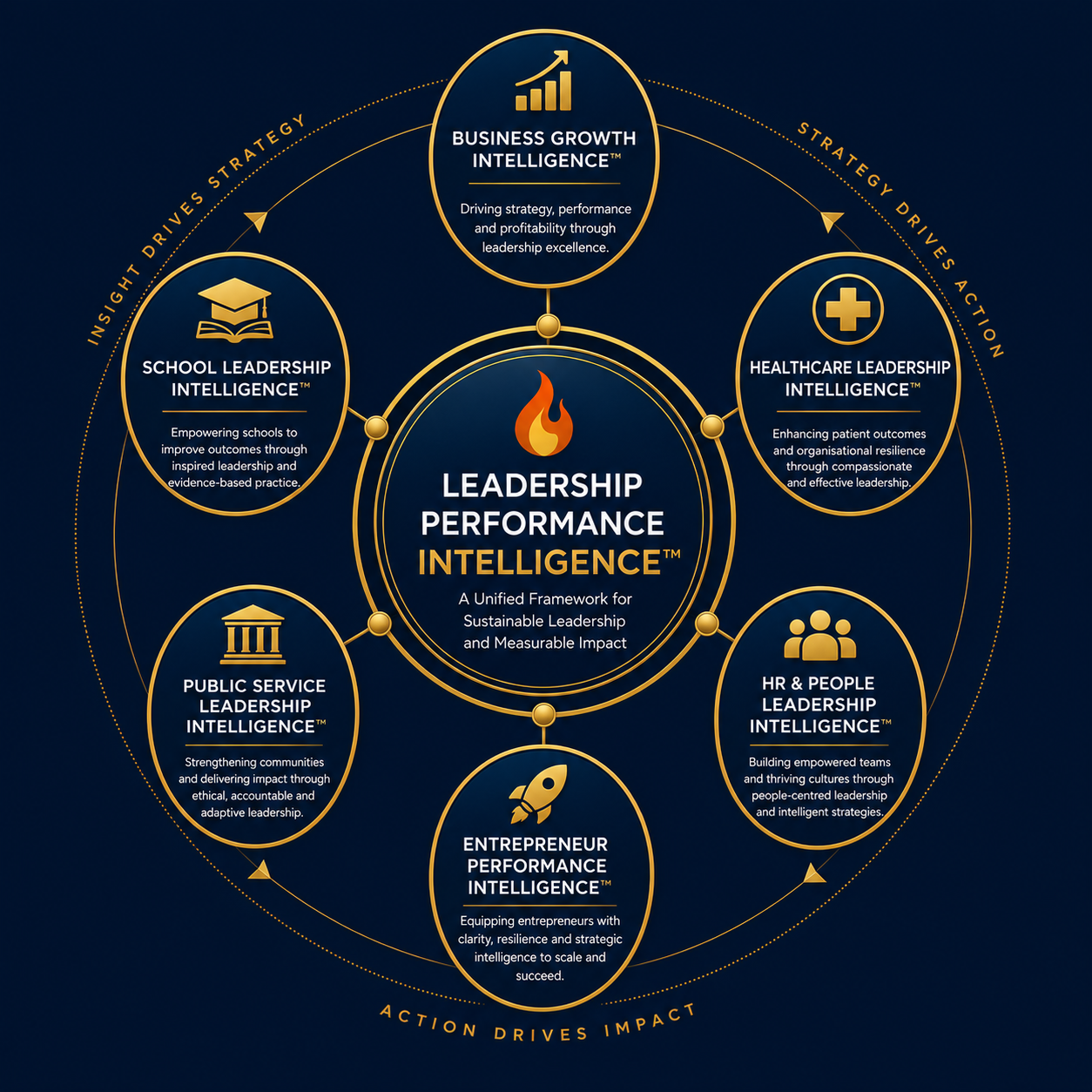
Why Leadership Performance Intelligence™ Matters Across Every Sector
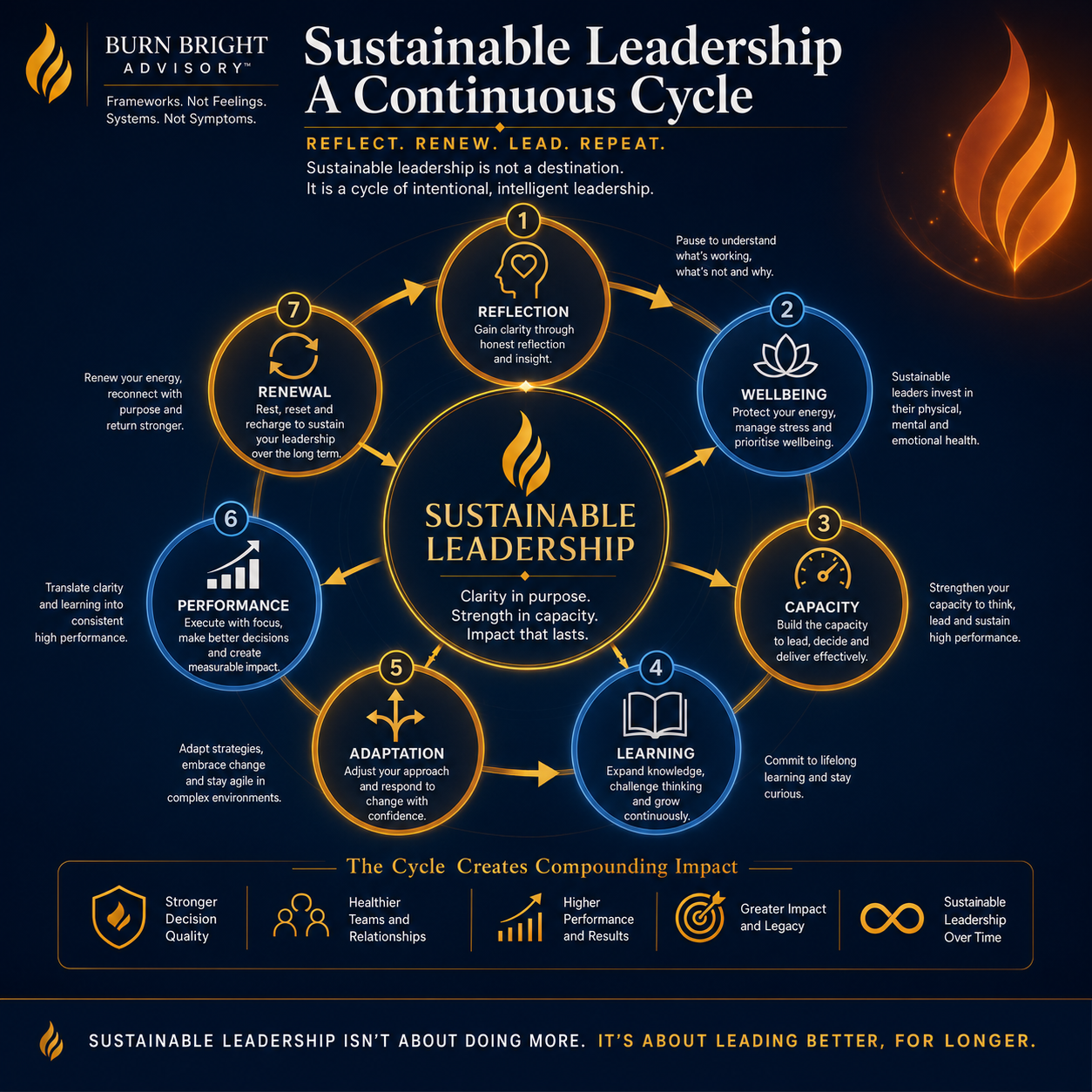
Leadership challenges rarely remain confined to one industry. While the context may differ between a hospital, a school, a government department, or a growing business, the underlying leadership pressures are remarkably similar. Every leader must make decisions with incomplete information. Every organisation must balance competing priorities. Every team depends upon trust, communication, learning, and adaptability. Every leader must perform under pressure while maintaining their own capacity to lead.
This universality explains why Leadership Performance Intelligence™ has relevance far beyond any single profession, providing a common language for understanding leadership regardless of sector while allowing each industry to apply the framework according to its own unique challenges.
Business Growth Intelligence™: Building Sustainable Competitive Advantage
Businesses often measure leadership success through profitability, growth, productivity, and shareholder value. These outcomes matter, but they are rarely achieved through financial expertise alone. Leaders who consistently outperform competitors typically demonstrate clear strategic direction, ethical commercial decision-making, high employee engagement, continuous organisational learning, adaptability during market disruption, effective innovation management, and sustainable leadership capacity.
Consider two organisations facing the same economic downturn. One responds with reactive cost-cutting that damages culture and increases turnover. The other applies Leadership Performance Intelligence™ by balancing financial discipline with long-term capability development — communicating transparently, involving employees in problem-solving, and protecting organisational learning despite financial pressures.
Both organisations survive.
Only one emerges stronger.
School Leadership Intelligence™: Creating Sustainable Learning Communities
Education has experienced extraordinary transformation over the past decade. School leaders now balance curriculum reform, staff wellbeing, student outcomes, safeguarding, inspection frameworks, budget pressures, community expectations, digital transformation, and inclusive education — while workload continues to expand.
Professionalism Intelligence™ supports consistent standards. Ethics Intelligence™ strengthens fair and equitable decision-making. Reflective Practice Intelligence™ encourages continuous school improvement. Knowledge Development Intelligence™ transforms individual teaching excellence into collective capability. Leadership Sustainability™ protects school leaders from the burnout that increasingly threatens educational leadership across many countries.
Exceptional schools are rarely built by exceptional individuals. They are built through intelligent leadership systems that enable teachers, support staff, students, and families to flourish together.
Healthcare Leadership Intelligence™: Leadership That Protects Patient Outcomes
Healthcare provides perhaps the clearest example of why leadership quality directly affects human outcomes. Poor leadership can contribute to communication failures, staff burnout, reduced psychological safety, increased clinical risk, higher workforce turnover, and declining patient experience.
Healthcare leaders constantly balance clinical quality, financial sustainability, patient demand, regulatory compliance, staff shortages, and technological innovation — pressures that require more than operational competence. Reflective Practice Intelligence™ encourages learning from clinical events. Emotional Intelligence™ strengthens multidisciplinary teamwork. Professionalism Intelligence™ reinforces accountability. Leadership Sustainability™ helps retain experienced healthcare leaders who might otherwise leave due to chronic workload pressures.
Public Service Leadership Intelligence™: Building Public Trust
Public sector organisations operate under intense public scrutiny. Leaders must simultaneously deliver value for money, transparency, accountability, policy implementation, community engagement, political responsiveness, and ethical governance.
Ethics Intelligence™ becomes particularly significant where competing stakeholder expectations frequently collide. Visionary Leadership Intelligence™ creates shared purpose despite political change. Constructivism Intelligence™ supports collaborative policymaking involving communities rather than simply delivering services to them.
Public trust grows not through promises. It grows through intelligent leadership behaviours demonstrated consistently over time.
HR & People Leadership Intelligence™: Developing Organisational Capability
Human Resources has evolved far beyond recruitment and compliance. Modern people leaders shape organisational culture, leadership development, employee experience, workforce planning, talent management, organisational learning, diversity and inclusion, and leadership succession.
Leadership Performance Intelligence™ positions HR as an organisational capability function rather than a transactional support service — using the Leadership Intelligence Compass™ to align recruitment, leadership development, performance management, coaching, diagnostics, and succession planning around one integrated leadership framework.
Entrepreneur Performance Intelligence™: Leading Growth Without Losing Capacity
Entrepreneurs often begin with extraordinary vision and technical expertise. As organisations grow, the leadership challenge changes dramatically — founders must now lead people, systems, strategy, investors, organisational culture, governance, and innovation. Many continue leading exactly as they did during the startup phase, and eventually growth stalls.
Adaptability Intelligence™ supports changing leadership styles as businesses mature. Knowledge Development Intelligence™ prevents organisational dependence upon one individual. Leadership Sustainability™ protects founders from the burnout that accompanies rapid growth. Professionalism Intelligence™ strengthens governance as organisations become increasingly complex.
Successful entrepreneurs ultimately learn that sustainable growth requires developing organisational intelligence — not simply working harder themselves.
Leadership Intelligence Creates Competitive Advantage
Technology can often be purchased.
Infrastructure can be replicated.
Processes can be copied.
Leadership intelligence cannot.
It becomes a unique organisational capability developed over time through culture, learning, reflection, and continuous improvement. Organisations that intentionally develop Leadership Performance Intelligence™ create advantages that competitors struggle to imitate because they are embedded within leadership behaviours rather than physical assets.
Leadership Performance Intelligence™ Is Future-Focused
Perhaps the greatest strength of Leadership Performance Intelligence™ is that it prepares organisations not merely for today’s challenges but for tomorrow’s uncertainty. Artificial intelligence will continue transforming work. Demographic changes will reshape labour markets. Economic disruption will remain inevitable. New technologies will redefine organisational capability.
Future leadership success will belong to organisations capable of learning faster than the environment changes. That requires more than competent leaders. It requires intelligent leadership systems.
Reflection Questions
Leadership Performance Intelligence™ begins with reflection. Sustainable improvement rarely occurs through acquiring more knowledge alone; it develops through intentionally examining how leadership is practised every day. Use the following questions individually, with your leadership team, or during strategic planning sessions.
Core Leadership Performance Intelligence™ Questions
- How would I currently define effective leadership?
- Which leadership decisions have produced my greatest organisational impact?
- Where do I consistently experience leadership pressure?
- Which leadership behaviours create the greatest trust within my team?
- Which leadership habits may unintentionally reduce trust or performance?
- How sustainable is my current leadership approach?
The following domain-specific questions can be used to explore each area of the Leadership Intelligence Compass™ in more depth.
Professionalism Intelligence™
- Do I consistently model the standards I expect from others?
- How effectively do I balance accountability with support?
- Where could I improve consistency?
Ethics Intelligence™
- What values guide my most difficult decisions?
- How transparent am I during periods of uncertainty?
- Would my team describe my leadership as fair?
Constructivism Intelligence™
- Do I create opportunities for others to contribute ideas?
- How often do I ask questions rather than provide answers?
- Do mistakes become learning opportunities?
Adaptability Intelligence™
- How well do I respond when plans change unexpectedly?
- Do I encourage innovation or unintentionally discourage it?
- What assumptions am I currently making that may no longer be true?
Visionary Leadership Intelligence™
- Can every member of my organisation explain our purpose?
- Does my daily leadership reinforce our long-term vision?
- What future challenges should we prepare for now?
Reflective Practice Intelligence™
- When did I last deliberately reflect on a significant leadership decision?
- What recent mistakes have improved my leadership?
- How frequently do I seek constructive feedback?
Knowledge Development Intelligence™
- Is knowledge concentrated within individuals or shared across teams?
- Do we learn systematically from projects?
- What knowledge could disappear if key people left tomorrow?
Emotional Intelligence™
- How well do I recognise my own emotional triggers?
- How effectively do I manage difficult conversations?
- Does my leadership create psychological safety?
Leadership Sustainability™
- Could I sustain my current leadership approach for another five years?
- What aspects of my workload are unsustainable?
- Am I developing future leaders or becoming indispensable?
Practical Action Steps
Leadership Performance Intelligence™ is developed through consistent practice rather than occasional inspiration. The following actions provide practical starting points.
Step 1 Assess Your Current Leadership System
Instead of evaluating isolated skills, examine leadership as an integrated system. Review:
- Decision quality
- Team engagement
- Organisational learning
- Leadership workload
- Strategic clarity
- Personal wellbeing
Improvement begins with accurate diagnosis.
Step 2 Strengthen One Intelligence Domain Each Month
Avoid trying to improve everything simultaneously. Instead, deliberately focus on one Leadership Intelligence Compass™ domain each month — for example, Professionalism Intelligence™ in month one, Reflective Practice Intelligence™ in month two, Emotional Intelligence™ in month three.
Small improvements accumulate into transformational leadership capability.
Step 3 Schedule Reflection
Reflection should become part of leadership — not something left until problems emerge. Consider:
- Weekly leadership review
- Monthly strategic reflection
- Quarterly capability review
- Annual leadership benchmarking
Reflection transforms experience into organisational intelligence.
Step 4 Develop Leadership Capacity
Avoid equating leadership with personal effort. Instead:
- Delegate intelligently
- Develop future leaders
- Build decision-making capability throughout the organisation
- Reduce unnecessary dependence upon one individual
Capacity is created by systems rather than heroics.
Step 5 Protect Leadership Sustainability
Sustainable leaders create sustainable organisations. Protect:
- Thinking time
- Recovery time
- Professional development
- Coaching and learning
- Strategic planning
Leadership is a long-term responsibility. It should never become an endurance competition.
What is Leadership Performance Intelligence™?
Leadership Performance Intelligence™ is Burn Bright Advisory’s integrated framework for developing leadership capability through interconnected intelligence domains that strengthen judgement, decision-making, organisational culture, and sustainable performance.
How is Leadership Performance Intelligence™ different from leadership competency models?
Competency models measure individual skills. Leadership Performance Intelligence™ examines how multiple leadership capabilities work together as an integrated system to improve long-term organisational performance.
Who should use Leadership Performance Intelligence™?
The framework is designed for executives, middle leaders, school leaders, healthcare leaders, HR professionals, public sector leaders, entrepreneurs, and emerging leaders. Leadership intelligence benefits every organisational level.
Why is leadership sustainability included?
Many leadership models assume leaders possess unlimited capacity. Leadership Sustainability™ recognises that protecting wellbeing, workload, energy, and continuous development is essential for maintaining effective leadership over an entire career.
Can organisations measure Leadership Performance Intelligence™?
Yes. Leadership intelligence can be assessed through structured diagnostics, benchmarking, behavioural observation, organisational performance indicators, leadership reflection, and capability assessments.
Is Leadership Performance Intelligence™ suitable for all sectors?
Yes. Although organisations differ, the underlying leadership challenges remain remarkably consistent. The framework has applications across business, education, healthcare, public services, HR, entrepreneurship, and non-profit organisations.
How does the Leadership Intelligence Compass™ support development?
The Leadership Intelligence Compass™ provides leaders with a structured development pathway across nine interconnected intelligence domains rather than isolated leadership skills, enabling continuous, evidence-informed leadership growth.
Where should leaders begin?
Most leaders benefit from first developing awareness. Understanding current strengths, workload, decision-making patterns, leadership capacity, and sustainability provides the foundation for meaningful improvement.
Conclusion
Leadership is entering a new era. The organisations that thrive in the coming decade will not simply employ capable leaders — they will develop intelligent leadership systems that integrate ethics, professionalism, adaptability, emotional intelligence, reflection, knowledge development, vision, and sustainability into everyday practice.
Leadership Performance Intelligence™ provides that foundation. Rather than asking leaders to work harder, it equips them to lead smarter. Rather than celebrating individual heroics, it builds organisational capability. Rather than focusing on short-term success, it develops leadership that remains effective across an entire career.
This is the purpose of the Leadership Intelligence Compass™: to help leaders continually strengthen their judgement, expand their capacity, and create organisations where people and performance can flourish together.
How Intelligent Is Your Current Leadership System?
Complete the Leadership Burnout Self-Assessment to see which domains of your leadership are strong, which need attention, and where sustainability may already be under pressure.
Free Leadership Intelligence
Get Weekly Leadership Insights
Join thousands of leaders receiving practical strategies on burnout prevention, workload design, and sustainable performance every week.