
Adaptability Intelligence™
How leaders navigate uncertainty, manage change without losing direction and continue performing at their best when the context around them shifts.
What Is Adaptability Intelligence™?
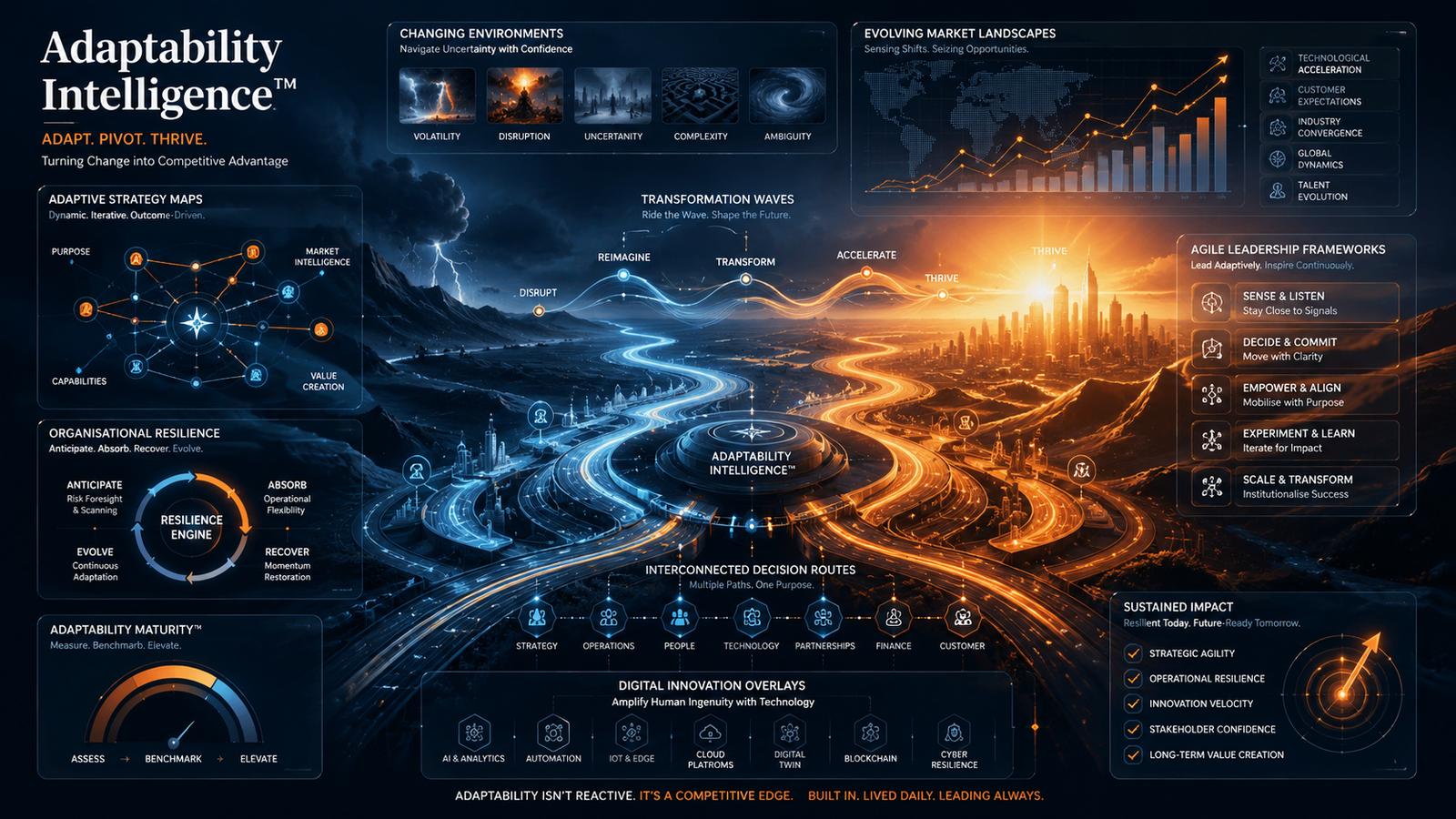
Why Adaptability Intelligence™ Matters
The pace of change facing modern organisations has made adaptability one of the most critical leadership capabilities. Technology, economic conditions, workforce expectations and organisational complexity are all shifting faster than most structures can absorb.
Leaders with high Adaptability Intelligence do not simply survive change — they use it to strengthen their organisations. They maintain performance and confidence during uncertainty, which is precisely when teams most need stable, clear leadership.
Adaptability Intelligence is not the ability to change everything. It is the ability to know what must change, what must not, and how to navigate the difference.
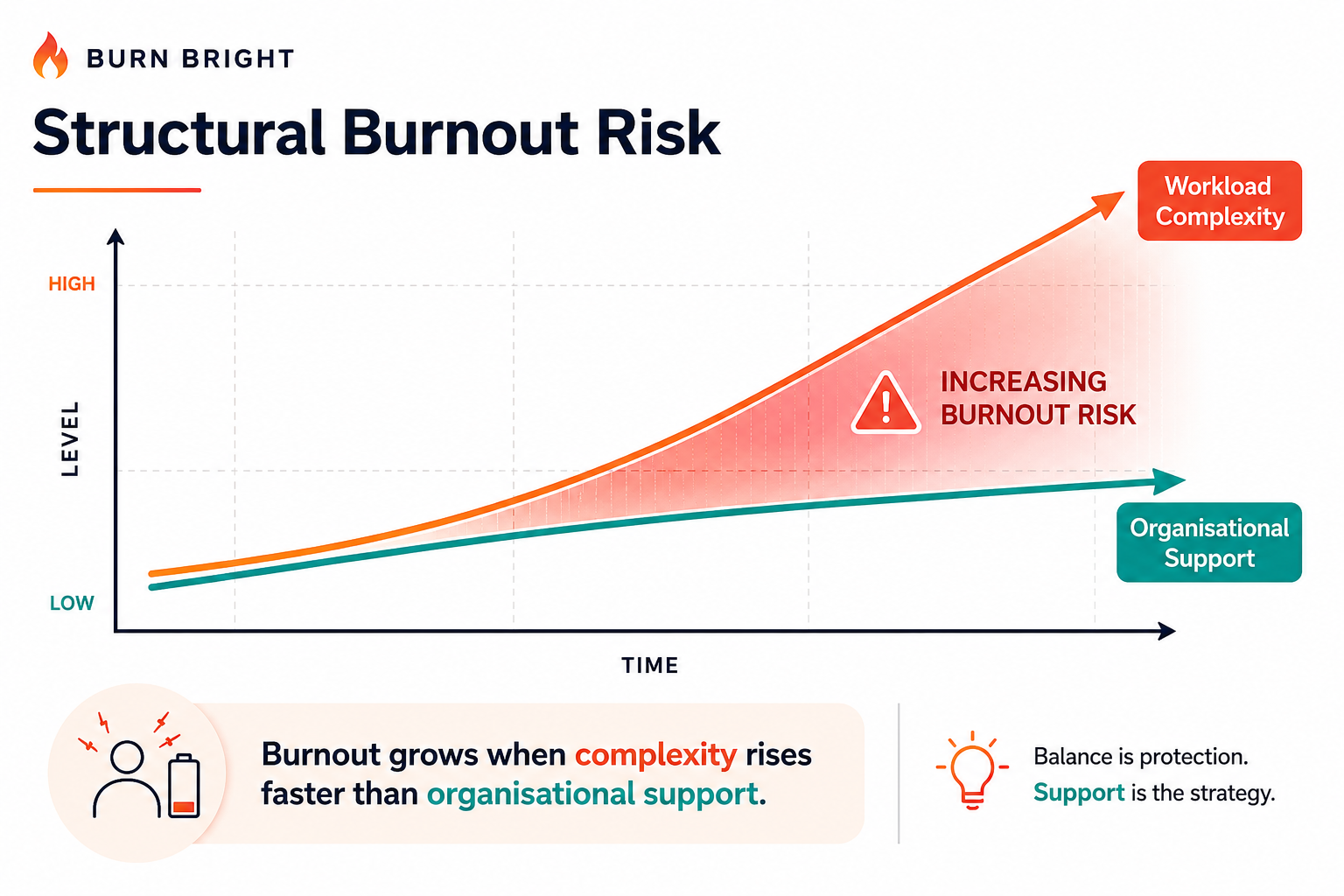
Who Adaptability Intelligence™ Is For
Adaptability Intelligence is essential for any leader working through significant organisational change, sector disruption, rapid growth or sustained uncertainty — which in practice means almost every leader today.
What High Adaptability Intelligence™ Looks Like
Strategic Horizon Scanning
They anticipate change before it arrives — regularly reviewing the environment for signals that require a response rather than waiting until disruption is unavoidable.
Anchored in Purpose
They distinguish between what must change (methods, structures) and what must not (values, purpose, standards) — and communicate that distinction clearly.
Flexible Thinking
They hold their current approach lightly — willing to revise it when evidence calls for it — without abandoning it at every sign of difficulty.
Composure Under Pressure
They model the composure that their team needs during uncertainty — preventing reactive emotion from driving poor decisions.
Learning From Disruption
They treat unexpected events as sources of organisational learning — conducting honest retrospectives that improve future adaptability.
Leading Others Through Change
They invest in helping their team adapt — communicating context, creating stability and acknowledging the human cost of change.
⚠️ Warning Signs
- Responding to change reactively rather than through considered judgment
- Changing direction frequently in response to pressure rather than evidence
- Maintaining approaches that are no longer working because change feels too risky
- Communicating uncertainty in ways that increase team anxiety rather than providing stability
- Treating change as purely structural rather than acknowledging its human impact
- Confusing activity and movement with genuine strategic adaptation
How to Develop Adaptability Intelligence™
Conduct a Regular Environment Review
Schedule a monthly 30-minute review: What has changed in our context? What signals should we be responding to? What assumptions are we making that may no longer hold?
Practise Perspective Shifting
When facing a significant challenge, consider it from three perspectives: the person most affected, your most experienced colleague, and someone entirely new to the situation.
Separate the Anchor From the Sail
Write down what must never change (values, purpose, non-negotiable standards) versus what should always be adaptable (processes, structures, methods).
Build Your Recovery Rhythm
After periods of intense change, deliberately create stabilisation time — for yourself and your team — before initiating the next significant shift.
Lead Change Conversations
When significant change occurs, proactively create space for your team to process it — naming the uncertainty, acknowledging the difficulty and providing what clarity you can.
Adaptability Intelligence™ Across Sectors
🎓 Education
A school leader who redesigns curriculum structures in response to changing student needs — while maintaining the school’s core purpose and values — demonstrates Adaptability Intelligence in action.
🏥 Healthcare
A clinical leader who rapidly reconfigures team working patterns during a system crisis — while maintaining care standards — builds the organisational resilience that protects outcomes.
🏢 Business
An executive who pivots commercial strategy in response to market disruption — rather than defending an approach that is no longer working — demonstrates the adaptive capacity that creates sustainable organisations.
🏛️ Public Sector
A public service leader who adapts service delivery in response to resource constraints — while protecting the most vulnerable — demonstrates the pragmatic creativity that public leadership demands.
👥 HR & People
An HR leader who redesigns people systems in response to shifting workforce expectations — including hybrid working, wellbeing and generational change — builds the employer proposition that attracts talent.
🚀 Entrepreneur
A founder who pivots the business model in response to market feedback — rather than persisting with a version that isn’t working — demonstrates the adaptive intelligence that separates sustainable businesses from failing ones.
Leadership Reflection Questions
- What significant change is approaching my organisation that I have not yet fully prepared for?
- Where am I currently maintaining an approach that the evidence suggests should change?
- How do I communicate uncertainty to my team — and what effect does my communication have on their anxiety?
- What did the last major disruption teach me about my organisation’s real adaptive capacity?
- Which of my current assumptions about the environment am I most reluctant to examine?
- How well do I distinguish between what must remain constant and what must change in my leadership?
Frequently Asked Questions
What is Adaptability Intelligence™?
Adaptability Intelligence™ is one of nine domains in the Leadership Intelligence Compass™. It measures how effectively a leader navigates change, uncertainty and disruption while maintaining performance and team stability.
Is Adaptability Intelligence™ the same as flexibility?
Flexibility is part of it. Adaptability Intelligence™ also includes the judgment to know when not to change — distinguishing between productive adaptation and reactive inconsistency.
How does Adaptability Intelligence™ relate to resilience?
Resilience is the capacity to recover. Adaptability Intelligence™ is the broader capacity to adjust — including anticipating change before it arrives and leading others through it effectively.
Can Adaptability Intelligence™ be developed?
Yes — through deliberate horizon scanning, structured retrospective practice, exposure to diverse contexts and coaching that builds cognitive flexibility.
How is Adaptability Intelligence™ assessed?
As part of the Leadership Intelligence Compass™ Assessment — a 36-statement instrument covering all nine domains.
Measure Your Adaptability Intelligence™
Take the Leadership Intelligence Compass™ Assessment to see how you score across all nine domains — including a personalised radar chart and development recommendations.
Free Leadership Intelligence
Get Weekly Leadership Insights
Practical strategies on leadership development, burnout prevention and sustainable performance — every week.
The Leadership Intelligence Journey
Every domain strengthens your progress along the full leadership journey.
Explore All 9 Compass™ Domains