Quick Answer
Key Takeaways
- People do not simply receive knowledge — they construct understanding through their existing experiences, assumptions and mental models, so leaders who only distribute answers can unintentionally weaken organisational thinking.
- Constructivism Intelligence™ reframes meetings, performance conversations, reviews and even mistakes as opportunities to examine thinking rather than simply transmit information.
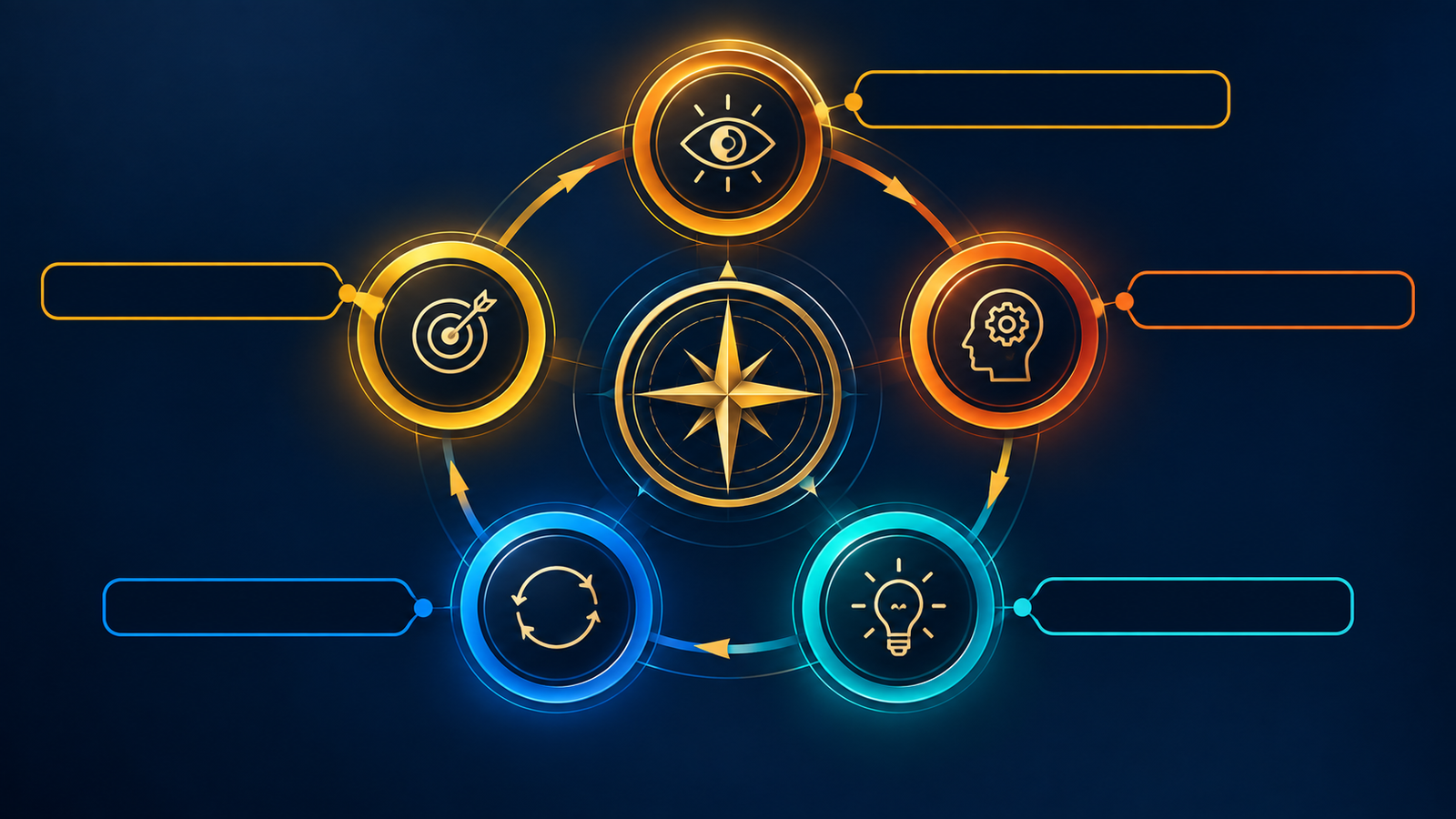
- The capability follows a repeatable cycle: Surface existing understanding → Examine assumptions → Introduce multiple perspectives → Reflect and reconstruct → Convert learning into action.
- Weak Constructivism Intelligence™ can look highly competent in the short term — fast decisions, confident answers — while quietly concentrating knowledge and judgement in a small number of people.
- Constructivist leadership is not indecisive leadership: it strengthens the quality of thinking that precedes a decision, without removing the leader’s authority or accountability to make it.
Constructivism Leadership: Why Great Leaders Build Understanding Rather Than Simply Give Answers
Leadership Has an Answer Problem
For generations, organisations have reinforced a deceptively simple picture of leadership.
The leader knows.
The team asks.
The leader answers.
The team executes.
This model can appear efficient. In stable environments, particularly where problems are predictable and technical expertise is concentrated at the top, it may even work reasonably well.
But there is a hidden consequence. Every time an organisation automatically sends uncertainty upwards, it can strengthen the authority of the leader while weakening the thinking capacity of the system. Over time, employees learn an important behavioural lesson: when something difficult happens, wait for the leader.
The result can be an organisation populated by capable people who have gradually become reluctant to exercise their capability. Meetings become reporting mechanisms. Questions become requests for permission. Problems travel upwards. Decisions accumulate around a small number of senior people. And leaders eventually complain that nobody takes enough ownership.

Constructivism leadership offers another possibility. Instead of asking, “How quickly can I give people the correct answer?” the leader begins asking, “What conditions will help us develop the strongest understanding of this situation?”
That apparently small shift changes leadership considerably. It moves leadership from answer distribution towards capacity construction. And that distinction sits at the heart of Leadership Performance Intelligence™.
Featured Snippet
What Is Constructivism Leadership?
Constructivism leadership applies principles of knowledge construction to the practice of leading people and organisations. At its core is the recognition that human beings interpret new information through what they already know, believe and have experienced. Two people can therefore encounter exactly the same event and construct very different interpretations of it.
Consider a senior leadership team reviewing a sudden decline in performance. The finance director may see a cost-control problem. The HR director may identify workload and capability pressures. Operations may see process failure. Sales may attribute the decline to changing customer behaviour. The chief executive may interpret the same figures as an execution problem.
Everyone is looking at the same organisation. But they are not necessarily seeing the same reality. Their interpretations are being shaped by professional expertise, previous experience, incentives, responsibilities and assumptions.
Traditional leadership may attempt to resolve this tension by identifying which interpretation is correct. Constructivist leadership asks something more sophisticated: what can we learn by examining how each interpretation has been constructed?
That does not mean every interpretation is equally accurate. Constructivism is not an argument for abandoning evidence. Quite the opposite. It requires leaders to expose assumptions to evidence, compare competing explanations and continually refine understanding. The objective is not endless discussion. The objective is better-informed action.
Constructivism Intelligence™: From Knowing to Learning
Within the Leadership Intelligence Compass™, Constructivism Intelligence™ can be understood as a leader’s capacity to build knowledge through inquiry, experience, reflection and interaction. It represents a fundamental shift.
| Traditional Leadership Assumption | Constructivism Intelligence™ |
|---|---|
| The leader provides knowledge | The leader enables knowledge construction |
| Questions reveal uncertainty | Questions reveal opportunities for learning |
| Experience proves expertise | Experience provides material for reflection |
| Disagreement is a barrier | Disagreement can expose different interpretations |
| Mistakes should be eliminated | Mistakes should be examined intelligently |
| Meetings transmit information | Meetings can construct shared understanding |
The distinction is significant. Knowledge matters. Expertise matters. Experience matters. But none should become intellectually static.
A leader with twenty years of experience does not automatically possess twenty years of increasingly sophisticated leadership knowledge. They may possess one year of experience repeated twenty times. The difference is reflection.
Experience produces events. Reflection turns events into potential learning. Dialogue tests that learning against other perspectives. Evidence challenges interpretation. Application converts understanding into capability. This creates a developmental cycle:
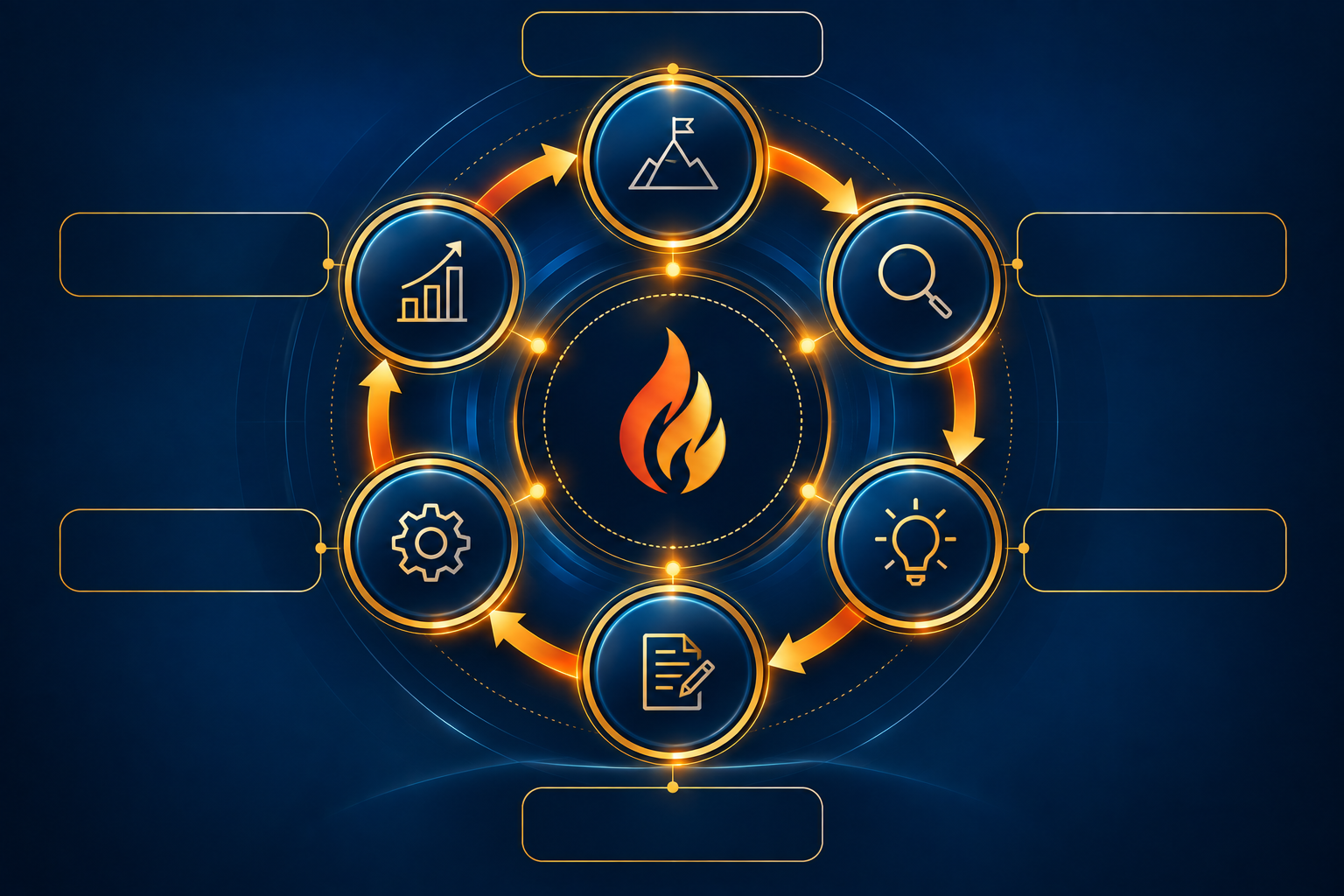
This cycle helps explain why Constructivism Intelligence™ connects so closely with Reflective Practice Intelligence™ and Knowledge Development Intelligence™ within the wider Leadership Intelligence Compass™. Constructivism concerns how understanding is formed. Reflective Practice Intelligence™ helps leaders examine the experience and assumptions from which that understanding develops. Knowledge Development Intelligence™ helps ensure that learning is captured, strengthened and made useful beyond the individual. Together, these capabilities contribute to something much larger: an organisation that can learn from itself.
Why Constructivism Leadership Matters More in Complex Organisations
Not every leadership challenge requires collective interpretation. If a building is on fire, the leader does not need to organise a reflective workshop about whether everyone agrees that evacuation is appropriate. Some situations require rapid direction. Some decisions are governed by regulation, clinical protocol, professional standards or established operating procedures. Leadership intelligence involves recognising the difference.
The value of constructivism becomes particularly visible when leaders face complex rather than merely complicated problems. A complicated problem may be difficult but still have an identifiable technical solution. A complex problem contains interacting variables, incomplete knowledge, competing perspectives and consequences that may emerge only after action is taken. Leadership increasingly operates in this second category.
Consider questions such as: how should an organisation integrate artificial intelligence without weakening professional judgement? Why is a high-performing team suddenly losing experienced employees? How should a school improve outcomes when achievement, attendance, wellbeing and staffing pressures are interacting simultaneously? How can a healthcare organisation improve patient flow without creating unsustainable workload elsewhere? How should a public-service organisation redesign services when citizens, policymakers, professionals and communities define success differently?
These are not simply problems waiting for an expert to reveal the answer. They are environments in which understanding itself must be constructed. And that requires a different leadership capability.
The Leader as an Architect of Understanding
Constructivist leadership does not make the leader less important. It changes where leadership value is created. The leader moves from being primarily a source of answers to becoming an architect of the conditions under which high-quality thinking can occur.
That involves several responsibilities. The leader must establish enough psychological safety for people to challenge assumptions. They must distinguish evidence from interpretation. They must bring different perspectives into the room. They must ask questions capable of revealing how conclusions were reached. They must recognise when existing knowledge is no longer adequate. And critically, they must know when discussion has produced enough understanding for action.
Consider a leader who hears, “The team is resistant to change.” A conventional response may be to design a communication campaign explaining why the change is necessary. A constructivist response begins earlier: what evidence tells us the team is resistant? What are employees actually saying? How are they interpreting the proposed change? What previous experiences are influencing that interpretation? What might leadership be describing as resistance that employees experience as legitimate concern? What do they understand that senior leadership may not?
The purpose is not to avoid change. It is to improve the organisation’s understanding before deciding how to lead it. That distinction can prevent leaders from solving the wrong problem exceptionally well.
From Leadership Dependency to Leadership Capacity
One of the most important implications of Constructivism Intelligence™ concerns Leadership Capacity™. A leader’s capacity is finite. There are only so many decisions one person can make, conversations they can hold, problems they can solve and relationships they can personally manage. When knowledge and judgement remain excessively concentrated around the leader, organisational performance becomes constrained by that individual’s cognitive and emotional bandwidth.
This is not simply a delegation problem. It is a knowledge-development problem. You cannot sustainably delegate judgement to people who have never been given opportunities to develop judgement. You cannot demand initiative from people who have repeatedly learned that initiative will be overridden. And you cannot create distributed leadership simply by telling employees to “take ownership.”
Ownership requires capability. Capability requires experience. Experience requires appropriate autonomy. And autonomy becomes more effective when accompanied by reflection, feedback and opportunities to reconstruct understanding. This is why constructivism leadership should be considered part of a broader Leadership Development System™, rather than an isolated leadership technique. The goal is not merely to produce better conversations. The goal is to build stronger thinkers throughout the organisation.

When this happens, something important changes. The leader no longer has to be present for intelligence to be present. That may be one of the clearest indicators of mature leadership capacity.
The Burn Bright Constructivism Intelligence™ Framework
If constructivist leadership is to become more than an interesting philosophy, leaders need a practical way to apply it. Within Leadership Performance Intelligence™, Constructivism Intelligence™ can be understood through five interconnected leadership practices that create a repeatable cycle through which leaders can strengthen individual judgement, collective intelligence and organisational learning.
Cycle Surface → Examine → Expand → Reflect → Act
Each practice builds on the last, and the results of action create new experience from which the cycle begins again.
1. Surface Existing Understanding
Leaders frequently begin conversations by providing information. Constructivist leaders begin by discovering what people already understand. This distinction matters because people rarely approach a problem as blank slates — they arrive with previous experiences, assumptions, professional knowledge, beliefs about what is possible and interpretations of what has already happened.
Before introducing a solution, therefore, the leader needs to understand the existing mental landscape. Useful questions include: what do we currently understand about this situation? What have we experienced before that is influencing our thinking? What evidence are we using? Where do our interpretations differ? What are we currently assuming to be true?
This is not questioning for its own sake. It is an attempt to make thinking visible. Until thinking becomes visible, it is difficult to improve it.
2. Examine Assumptions
Every leadership decision contains assumptions. Some are supported by strong evidence. Others are inherited from previous practice. Some reflect professional expertise. Others survive simply because nobody has challenged them. Constructivism Intelligence™ encourages leaders to distinguish between these categories.
Imagine an organisation where senior leaders repeatedly say, “People need to return to the office because collaboration is declining.” There may be legitimate evidence supporting that conclusion. But a constructivist leader does not allow the statement to become organisational truth simply because it has been repeated frequently. They investigate: what does collaboration mean in this context? Which indicators suggest it has declined? Has remote work caused the problem, or have poor meeting structures, unclear accountability or weakened relationships contributed? Do different teams experience the issue differently? What evidence might contradict the prevailing interpretation?
This process is particularly important because leadership authority can transform assumptions into accepted reality remarkably quickly. When senior leaders stop questioning their own interpretations, organisations can become highly efficient at reinforcing inaccurate beliefs.
3. Introduce Multiple Perspectives
Complex problems rarely become clearer by repeatedly consulting people who see the organisation in the same way. Constructivist leadership deliberately broadens the interpretive field. A strategic decision might therefore include perspectives from frontline employees, customers, operational specialists, finance teams, HR professionals or external stakeholders.
This is not consensus leadership. The purpose is not to ensure everyone agrees. It is to increase the quality of understanding available before a decision is made. A hospital executive may understand financial sustainability. A clinician may understand patient risk. A nurse may understand workflow. A patient may understand how the system actually feels to navigate. None possesses the complete picture independently. Leadership intelligence emerges partly from the capacity to integrate these perspectives without pretending that their interests will always align.
4. Reflect and Reconstruct
New information alone does not guarantee learning. People can encounter evidence that contradicts their assumptions and still preserve the original assumption. Reflection provides the bridge between experience and reconstructed understanding.
Leaders can facilitate this through questions such as: what has changed in our understanding? Which assumption can we no longer defend? What surprised us? What did we initially interpret incorrectly? What would we now do differently? This is where Constructivism Intelligence™ intersects strongly with Reflective Practice Intelligence™. Reflection prevents experience from simply accumulating — it converts experience into material from which better judgement can be constructed.
5. Convert Learning Into Action
Constructivism leadership must ultimately improve action. A leadership team can hold intellectually sophisticated conversations and still fail to change anything. The final stage therefore asks: what will we do differently because our understanding has changed?
That might involve changing a decision, testing a hypothesis, redesigning a process, delegating greater authority, collecting additional evidence or deliberately running a small experiment before committing significant resources. Then, crucially, the results of action create new experience from which the cycle begins again.
What Happens When Constructivism Intelligence™ Is Weak?
Low Constructivism Intelligence™ does not necessarily look like poor leadership. In fact, it can initially look extremely competent. The leader speaks confidently. Decisions happen quickly. Meetings are controlled. Questions are answered immediately. Uncertainty is minimised. Employees know exactly what they have been told to do.
The problem becomes visible later. People stop challenging assumptions. Senior leaders become increasingly distant from operational reality. Employees learn to present information in ways leadership expects. Mistakes are concealed rather than examined. Innovation becomes performative rather than genuine. Decision-making becomes dependent on a small group.
Eventually, the organisation knows less than the people inside it collectively know. That is an important distinction. An organisation can employ highly intelligent people while possessing weak organisational intelligence. The difference is whether knowledge can move, combine, be challenged and develop.
The Expertise Trap
One particular risk is the expertise trap. Experience creates valuable pattern recognition. Leaders who have encountered similar problems repeatedly can often identify solutions faster than less experienced colleagues. But expertise can also create premature certainty. The experienced leader sees something familiar and concludes, “I know what this is.” Sometimes they are correct. Sometimes the current situation merely resembles the previous one.
Constructivism Intelligence™ allows expertise to remain valuable without becoming unquestionable. The mature leader can say, “My experience suggests X. What might I be missing?” That sentence does not diminish expertise. It disciplines it.
This is particularly important in environments experiencing rapid technological, demographic, economic or social change. Yesterday’s successful mental model can become tomorrow’s strategic constraint. The strongest leaders therefore develop not only knowledge but the capacity to reconstruct knowledge.
Constructivism Leadership Is Not Indecisive Leadership
One misconception deserves particular attention. Constructivist leadership does not require leaders to consult everyone about everything. Nor does it mean that every opinion should carry equal weight. Leadership still involves judgement, accountability and decision-making. The difference concerns the quality of the process preceding judgement.
A leader may listen carefully to six perspectives and still make a decision some people oppose. They may invite challenge and ultimately retain their original position. They may facilitate exploration and then determine that immediate action is necessary.
Constructivism Intelligence™ therefore works alongside Professionalism Intelligence™, Ethics Intelligence™ and Adaptability Intelligence™. Professionalism helps establish standards and accountability. Ethics Intelligence™ asks leaders to consider consequences, responsibilities and competing interests. Adaptability Intelligence™ enables responses to changing circumstances. Constructivism Intelligence™ strengthens the quality of understanding from which those responses emerge.
The Leadership Intelligence Compass™ is therefore best understood as an interconnected system rather than a collection of isolated leadership traits. Leadership problems rarely respect conceptual boundaries. Neither should leadership development.
Constructivism Leadership Across Different Sectors
The principles remain consistent across sectors, but their application changes according to context.
Business Growth Intelligence™: Stop Making the Founder the Operating System
Growing businesses frequently encounter a constructivist challenge. During the early stages, founders often possess much of the organisation’s critical knowledge — they understand the customers, built the product, know the suppliers and remember why previous decisions were made. Employees naturally turn to them. Initially, this can accelerate growth. Eventually, it can constrain it.
If every difficult decision requires the founder’s interpretation, organisational capacity cannot grow faster than the founder’s availability. Constructivist leadership changes the developmental question from “how do I get people to make the same decisions I would make?” to “how do we develop the judgement required for people to make strong decisions without me?”
That requires explaining reasoning rather than merely issuing instructions. After a significant decision, a leader can discuss which evidence mattered, which trade-offs were considered, what assumptions influenced the decision, what risks were accepted and what would cause the decision to be reconsidered. The decision itself becomes a leadership-development opportunity — that is how organisational knowledge begins moving beyond the founder.
School Leadership Intelligence™: From Instructional Compliance to Professional Learning
Constructivism has particularly important implications for educational leadership. Schools exist to facilitate learning, yet leadership systems within schools can sometimes treat teachers as passive recipients of improvement strategies: a school identifies a problem, senior leadership selects an intervention, teachers receive training, implementation is monitored, results are measured.
There are circumstances where consistency is essential, particularly around safeguarding, statutory requirements and agreed standards. But professional development becomes substantially more powerful when educators are also enabled to examine practice, evidence and assumptions. Suppose student engagement is declining — a constructivist school leader might bring teachers together to investigate what disengagement looks like across different classrooms, when students are most engaged, what assumptions are being made about motivation, what students are saying, and whether curriculum, pedagogy, relationships and workload are interacting.
The leader is not abandoning instructional leadership. They are strengthening it by transforming professional experience into collective knowledge — closely connected to Leadership Reflection™ and the wider development of professional judgement.
Healthcare Leadership Intelligence™: Creating Conditions Where Expertise Can Speak
Healthcare demonstrates why constructivist leadership must be combined with professional standards. Clinical environments contain established protocols for good reason — patient safety cannot depend upon endless interpretation. Yet healthcare is also profoundly multidisciplinary, and hierarchical leadership can prevent critical information from travelling upwards.
A constructivist healthcare leader creates structured opportunities for different forms of expertise to contribute. After an adverse event or near miss, the weakest question may be “who made the mistake?” A stronger starting point is “how did the people involved understand the situation at the time?” That question does not eliminate accountability — it expands the investigation into what information was available, what signals were missed, which assumptions shaped decisions, whether workload affected interpretation, and whether the system made the correct action unnecessarily difficult.
The objective is to learn at both the individual and system level — that is where Constructivism Intelligence™ contributes directly to stronger organisational learning.
Public Service Leadership Intelligence™: Constructing Understanding Across Competing Realities
Public-service leaders often operate where problems have no single owner and stakeholders define success differently. A policy that appears efficient from an administrative perspective may create difficulty for citizens. A financially rational decision may produce social consequences elsewhere. Frontline employees may see implementation barriers invisible to policymakers.
Constructivist leadership becomes valuable because it resists the assumption that positional authority automatically provides the clearest view of reality. Effective public-service leadership creates mechanisms through which policy understanding can be tested against lived experience. The question becomes not merely “did we implement the policy?” but “what happened when the policy encountered reality?” That second question creates learning.
HR & People Leadership Intelligence™: Moving Beyond Engagement Scores
People data can create an illusion of certainty. An engagement score of 71%, for example, appears precise. But what does it actually mean? Which experiences sit underneath the number? Do different groups interpret the workplace differently? What has changed since the previous survey? Which organisational assumptions are being challenged?
Constructivist HR leadership uses quantitative information as the beginning of inquiry rather than the end of interpretation. Data tells leaders where to look. Dialogue helps them understand what they are seeing. Reflection helps them determine what it means. Action tests whether that interpretation was useful. This creates a much stronger relationship between Leadership Benchmarking™, organisational listening and leadership development.
Entrepreneur Performance Intelligence™: Learning Faster Than the Business Changes
Entrepreneurs operate through assumptions constantly — we believe customers want this, we believe this price will work, we believe this person is the right hire, we believe this marketing channel will scale. The danger begins when belief becomes identity. If a leader becomes psychologically attached to being right, evidence becomes threatening.
Constructivist entrepreneurs treat assumptions as propositions to test rather than truths to defend. This creates an important relationship between Constructivism Intelligence™ and Adaptability Intelligence™: adaptation becomes possible because the leader is willing to reconstruct understanding. The question after disappointing results is therefore not “how do we prove the strategy was right?” It is “what has reality taught us that our original model did not contain?” That is not failure. It is intelligent reconstruction.
Constructivism Intelligence™ and Leadership Sustainability™
There is another important consequence. Leaders who believe they must personally possess every answer carry an enormous cognitive burden. Every uncertainty becomes theirs to resolve. Every problem travels upwards. Every difficult decision consumes their capacity. Over time, the organisation becomes increasingly dependent while the leader becomes increasingly overloaded.
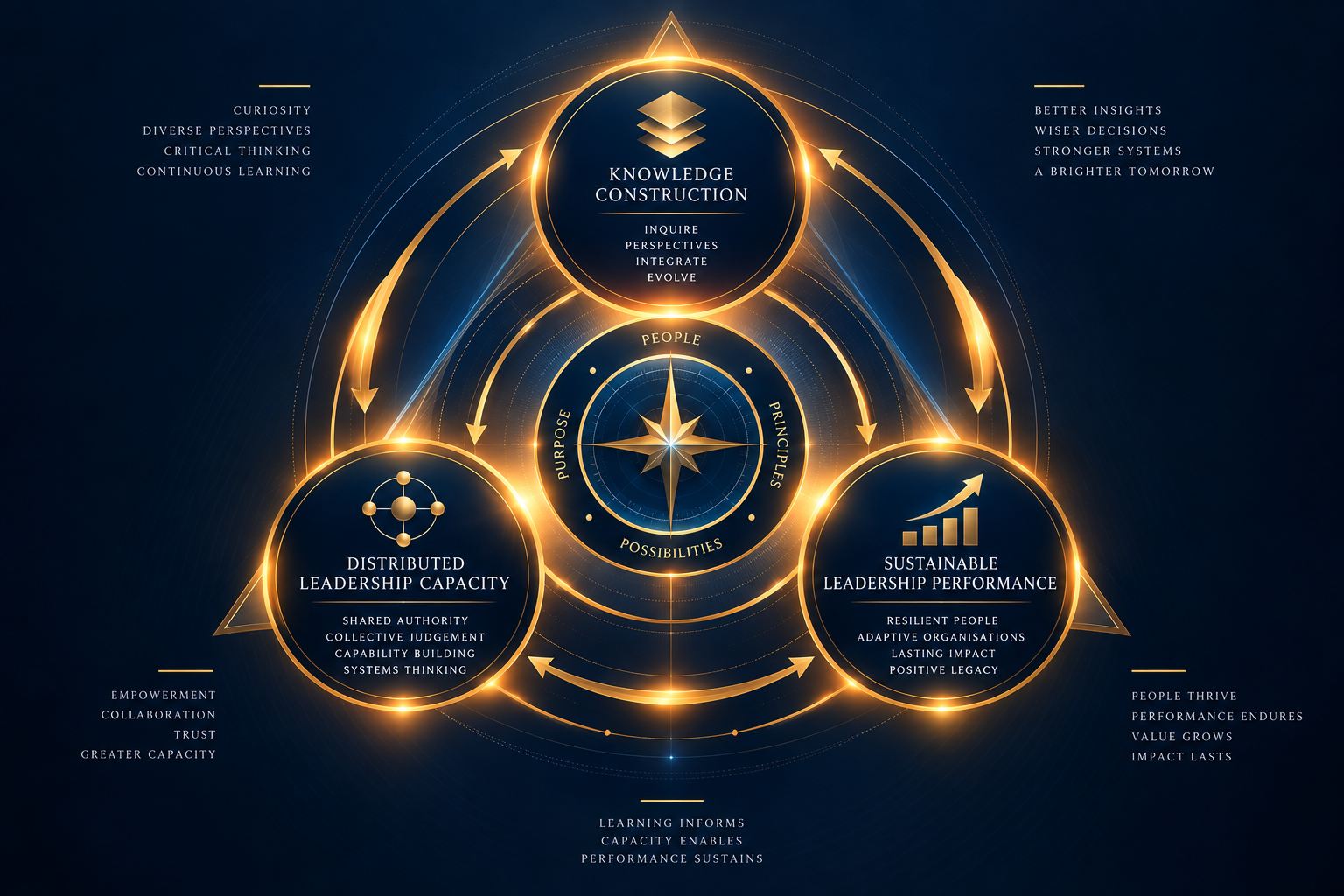
This connects Constructivism Intelligence™ directly with Leadership Sustainability™, Leadership Capacity™ and Leadership Workload™. Sustainable leadership is not achieved simply by encouraging leaders to rest more effectively. The structure of leadership itself must become more sustainable. Developing the thinking capacity of others is one way to achieve that.
The leader who teaches people what to think remains necessary. The leader who develops people’s capacity for how to think gradually creates organisational capability that can operate without constant intervention. This is not a loss of leadership authority. It is one of the highest expressions of leadership maturity.
Turning Constructivism Intelligence™ Into Everyday Leadership Practice
The value of Constructivism Intelligence™ ultimately depends on whether it changes how leaders behave. Leadership development frequently fails at this point: a framework is introduced, people understand it intellectually, they agree with its principles — then Monday morning arrives and familiar patterns return. The leader answers the question. The meeting follows the established agenda. The same voices dominate discussion. The urgent problem receives the familiar solution. Nothing is reconstructed.
For Constructivism Intelligence™ to become part of Leadership Performance Intelligence™, it must influence everyday leadership routines. A useful starting point is the Burn Bright Five-Question Constructivist Leadership Check™. Before resolving a significant problem, ask:
- What do we think we know? Separate observable information from interpretation. What has actually happened? What evidence exists? What are people concluding from that evidence? These are not necessarily the same thing.
- What are we assuming? Every strategy contains assumptions. Every diagnosis contains assumptions. Every forecast contains assumptions. Make them visible.
- Whose perspective is missing? Ask who experiences the issue differently — this might be a customer, employee, patient, student, parent, frontline professional, supplier or community stakeholder. The people furthest from formal decision-making may sometimes possess information closest to the problem.
- What could change our minds? This is one of the most important questions in intelligent leadership. If the answer is “nothing,” the organisation is no longer investigating — it is defending.
- What will we do differently because of what we learned? The answer may be a decision, an experiment, collecting better evidence, or stopping something. It may even mean continuing with the original strategy — but now with greater confidence because competing interpretations have been examined.
The Constructivist Meeting
Meetings offer one of the simplest places to apply these principles. Many leadership meetings are structured around information transmission: what happened, who owns the problem, what is the deadline, what decision do we need? These questions are necessary, but insufficient for complex work. A constructivist meeting adds another layer: how are we interpreting what happened?
Imagine performance has fallen by 12%. Instead of immediately asking how to restore the number, the leader separates the discussion into stages. First, establish evidence — what has changed, where, when, for whom? Next, surface interpretations — why does each person believe it happened? Then examine assumptions — which explanation are we accepting without sufficient evidence? Then expand perspectives — who understands something about this issue that is currently absent from the discussion? Finally, determine action — what should we test, change or investigate?
The meeting has now moved from reporting performance to constructing understanding. That is a substantially different organisational capability.
Creating Constructive Challenge Without Creating Fear
Constructivism depends upon challenge. But challenge requires conditions in which people can disagree without believing disagreement will damage their standing. This connects Constructivism Intelligence™ with Emotional Intelligence™, Professionalism Intelligence™ and Ethics Intelligence™.
The leader’s response to challenge teaches the organisation whether challenge is genuinely welcome. A leader can repeatedly say “my door is always open.” But if their expression hardens when somebody disagrees, if dissenting employees are excluded from later conversations, or if inconvenient evidence is dismissed, the organisation learns the real rule. Culture is constructed through repeated experience, not leadership slogans.
Leaders who want stronger thinking must therefore become conscious of how they respond when their own thinking is questioned. Useful responses include: “Show me how you reached that conclusion.” “What are you seeing that I may not be seeing?” “What evidence would strengthen that argument?” “What assumption in my thinking do you think we should examine?” These questions do not require leaders to surrender authority. They require enough intellectual confidence to expose authority to examination.
The Relationship Between Reflection and Reconstruction
Reflection is sometimes treated as an optional leadership activity undertaken when time permits. Within Leadership Performance Intelligence™, it should be understood differently — reflection is part of the infrastructure through which leadership knowledge develops.
Without reflection, organisations can repeat experience without increasing intelligence. A project succeeds, everyone celebrates, the organisation moves on. A project fails, everyone identifies somebody responsible, the organisation moves on. In both cases, valuable knowledge can disappear.
Constructivist leadership asks: what produced the outcome? What did we believe at the beginning? Which beliefs proved accurate? Which proved incomplete? What happened that we did not anticipate? What should become part of our future practice? This is why Leadership Reflection™ should not exist separately from performance — reflection improves the organisation’s capacity to interpret performance, and over time it also strengthens Leadership Benchmarking™ because leaders become better able to compare not merely outcomes, but the behaviours, conditions and decisions that produced them.
From Individual Learning to Organisational Knowledge
One of the greatest losses inside organisations occurs when learning remains inside individuals. A leader solves a difficult problem. A team develops an effective process. A school discovers a successful intervention. A healthcare unit redesigns a workflow. An entrepreneur learns something important about customers. Then people move roles, teams change, memory fades, and the organisation relearns the lesson later at considerable cost.
Constructivism leadership should therefore connect directly to the Leadership Intelligence Library™. Important learning can be captured through leadership insights, case studies, decision reviews, reflective summaries, diagnostic findings, tested practices, planning tools, implementation lessons and sector-specific examples. The purpose is not bureaucratic documentation — it is organisational memory.
A mature Leadership Development System™ enables insight to move from individual experience, to team learning, to organisational knowledge, to future leadership capability. That is how learning compounds.
A Practical 30-Day Constructivism Intelligence™ Experiment
Leaders do not need to redesign their organisation before applying these principles. For the next 30 days, choose one recurring leadership environment: a management meeting, team review, project meeting or professional-development conversation.
Week 1: Observe
Do not immediately change everything. Notice how knowledge currently moves — who speaks, who asks questions, who provides answers, how quickly alternative explanations are closed down, and how often the most senior person speaks first. Record the patterns.
Week 2: Surface Assumptions
Introduce one question consistently: “What are we assuming here?” Do not use it aggressively — use it to create intellectual curiosity, and notice what emerges.
Week 3: Expand Perspective
Before one important decision, deliberately identify a perspective that would normally be absent. Invite it into the discussion and compare how the decision develops.
Week 4: Reflect and Capture
At the end of the month, ask what you understood differently, which conversations improved, what became more difficult, whether decision quality changed, whether people contributed differently, and what should become permanent practice.
The objective is not to prove that constructivist leadership works in every situation. The objective is to develop evidence about your leadership system. That itself is constructivist practice.
Leadership Reflection Questions
- When people bring me problems, do I automatically provide answers or help them develop their own thinking?
- How comfortable am I when somebody challenges my interpretation?
- Which assumptions about leadership have I carried from previous organisations or leaders?
- Where has my expertise become a potential constraint on curiosity?
- Whose perspective is routinely absent from important decisions?
- How effectively does my organisation distinguish evidence from interpretation?
- What happens when new evidence contradicts a senior leader’s position?
- Do our meetings primarily exchange information or construct understanding?
- How systematically do we convert experience into organisational learning?
- If I were unavailable for a month, would leadership intelligence continue to operate effectively?
The final question connects constructivism directly with Leadership Sustainability™ and Leadership Capacity™. If organisational thinking collapses when one leader disappears, the organisation may possess authority without sufficient distributed capability.
Action Steps
Begin with five practical actions.
- Audit one recurring meeting. Identify who provides knowledge, who questions it and whose interpretation usually becomes dominant.
- Replace one answer with a question. When somebody asks what they should do, resist unnecessary dependency — ask them how they understand the situation and what options they see.
- Identify one organisational assumption. Choose something “everyone knows” and investigate the evidence supporting it.
- Create one structured reflection point. After a project, decision or significant event, capture what changed in the team’s understanding.
- Transfer one piece of leadership judgement. Rather than merely delegating a task, explain the principles, trade-offs and reasoning that allow somebody else to exercise judgement.
Small changes in leadership behaviour can gradually change how intelligence moves through an organisation.
Conclusion: The Leader Who Builds Thinkers
Leadership will always require knowledge. There are moments when leaders must provide clarity, exercise authority and make decisions. But leadership becomes fragile when the organisation’s intelligence is concentrated entirely in the leader.
The stronger ambition is different. Build people who can interpret. Build teams that can question. Build cultures that can learn. Build systems capable of remembering. Build organisations that can reconstruct their understanding when reality changes.
That is the contribution of Constructivism Intelligence™ to Leadership Performance Intelligence™. It shifts the leader’s identity from the person expected to know everything towards the person responsible for creating conditions in which stronger collective understanding becomes possible.
And this is where Constructivism Intelligence™ connects to the wider Leadership Intelligence Compass™. Reflection allows experience to be examined. Knowledge Development allows learning to accumulate. Adaptability enables understanding to change. Emotional Intelligence™ helps leaders navigate the human dynamics of disagreement. Ethics Intelligence™ ensures different interests and consequences are considered. Professionalism Intelligence™ converts understanding into accountable practice. Leadership Sustainability™ ensures the system does not depend upon endless personal intervention from one individual.
Together, these capabilities create something considerably more valuable than a knowledgeable leader. They create an intelligent leadership system.
The question for leaders is therefore no longer simply, “Do I know what to do?” A more powerful question is, “Am I building an organisation capable of learning what to do — even when I do not already know the answer?” That is the transition from leadership knowledge to Leadership Performance Intelligence™.
What is constructivism leadership?
Constructivism leadership is an approach in which leaders help people develop understanding through experience, inquiry, dialogue, reflection and multiple perspectives. Rather than relying solely on transmitting answers, leaders create conditions in which stronger individual and collective judgement can develop.
What is Constructivism Intelligence™?
Within Burn Bright Advisory’s Leadership Intelligence Compass™, Constructivism Intelligence™ describes the capacity to recognise how understanding is constructed and to use inquiry, evidence, reflection and dialogue to develop stronger leadership knowledge and judgement.
Why is constructivism important in leadership?
Modern leaders frequently face complex problems for which information is incomplete and different stakeholders possess different perspectives. Constructivist practice helps organisations challenge assumptions, integrate knowledge and develop more informed responses.
Does constructivist leadership mean leaders should stop giving answers?
No. Some situations require clear direction, technical expertise or immediate decisions. Constructivism Intelligence™ helps leaders distinguish between circumstances requiring direction and those where developing the thinking capacity of others will create greater long-term value.
How does constructivism improve leadership capacity?
When leaders explain reasoning, encourage inquiry and give others opportunities to exercise judgement, knowledge becomes distributed more widely. This can reduce unnecessary dependency on individual leaders and strengthen Leadership Capacity™ across the organisation.
What is the relationship between constructivism and reflective leadership?
Constructivism explains how understanding can develop and change. Reflective Practice Intelligence™ enables leaders to examine experiences and assumptions that shape that understanding. The two therefore reinforce one another.
Can constructivism leadership improve organisational learning?
Yes. When reflection and learning are systematically captured and shared, individual experience can become team knowledge and eventually organisational capability. The Leadership Intelligence Library™ can support this process by providing a structured environment for leadership knowledge.
What are the risks of constructivist leadership?
Poorly applied constructivism can result in excessive consultation, unclear accountability or delayed decisions. Effective Constructivism Intelligence™ therefore requires leaders to combine inquiry with judgement, professional standards and clear decision rights.
How can I develop Constructivism Intelligence™?
Start by making assumptions visible, asking how conclusions were reached, seeking perspectives normally absent from decisions, creating structured reflection after significant events and allowing other people to exercise progressively greater judgement.
Where Does Your Leadership Intelligence Stand?
Discover how strongly your leadership builds understanding — rather than simply distributing answers — with the free Leadership Burnout Self-Assessment.
Free Leadership Intelligence
Get Weekly Leadership Insights
Join thousands of leaders receiving practical strategies on burnout prevention, workload design, and sustainable performance every week.